What if the only thing standing between you and a safer, more independent life in the home you love isn’t a lack of funds, but simply knowing where to look? For many Oregon families, the fear of losing independence due to the high cost of a bathroom remodel or a stair lift installation is a daily weight. You deserve to feel secure in your sanctuary, yet the technical jargon of Medicaid eligibility and the search for reliable funding can feel like a stressful ordeal. It’s common to worry that staying home safely might be financially out of reach.
We believe that peace of mind begins with financial clarity. This guide provides a clear roadmap for financing for home accessibility modifications Oregon, helping you distinguish between “free money” grants and low-interest loans that fit your budget. We’ll walk you through the latest 2026 updates for local Clackamas County programs, Oregon’s unique USDA Section 504 pilot rules, and specialized veteran benefits. By the end of this article, you’ll have a practical plan to transform your home into a space that protects your dignity while keeping your life savings intact.
Key Takeaways
- Identify “free money” sources through state-specific grants that allow you to enhance your home’s safety without the stress of repayment.
- Explore a comprehensive roadmap for financing for home accessibility modifications Oregon, focusing on low-interest options designed to restore your independence.
- Learn how to utilize tax incentives and home equity to fund essential life improvements while protecting your family’s financial security.
- Understand how to prioritize your budget around the most critical safety needs to ensure your home remains a beautiful, accessible sanctuary for years to come.
Exploring Oregon Grants and Public Funding for Home Accessibility
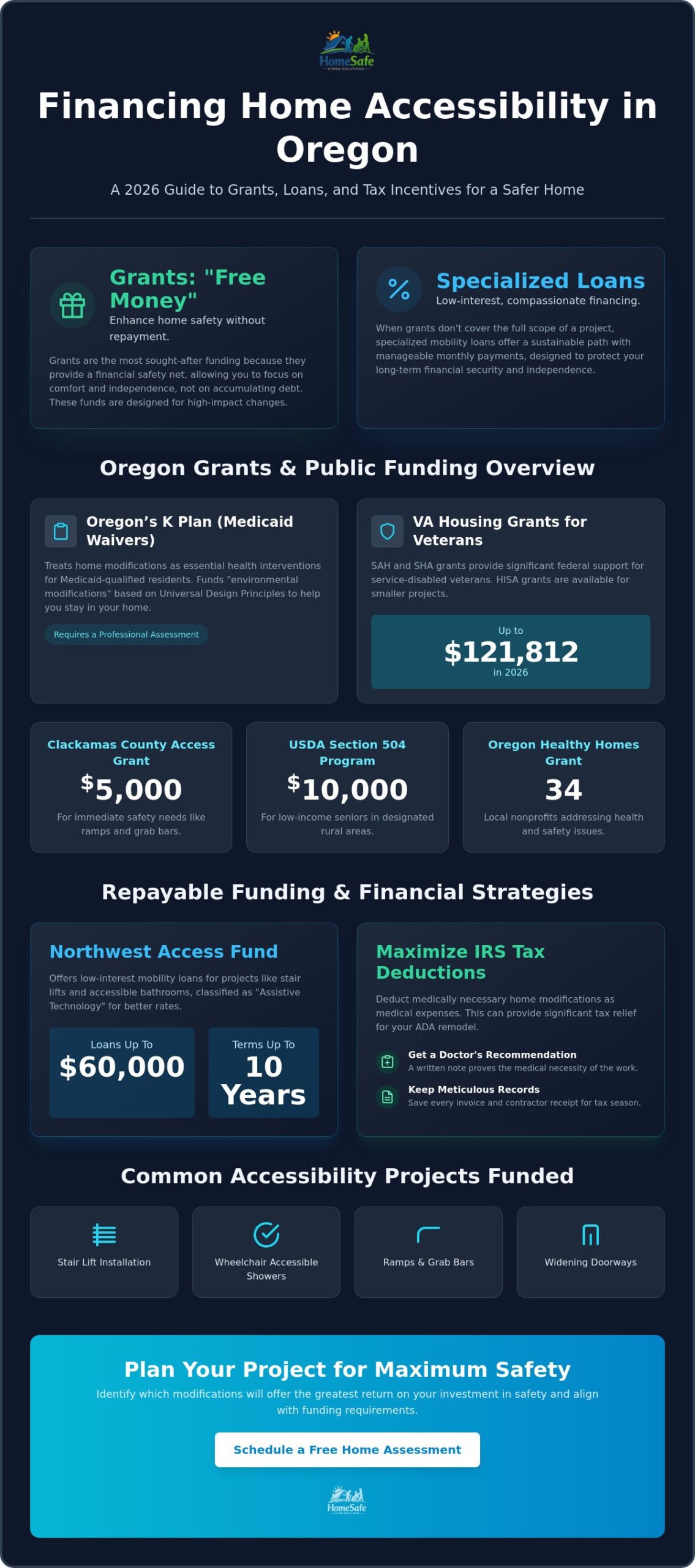
Finding “free money” to update your home doesn’t have to be a struggle for families in the Portland metro area. Grants represent the most sought-after type of financing for home accessibility modifications Oregon because they provide a safety net that never needs to be repaid, letting you focus on your comfort rather than debt. In the 2026 market, local programs across Clackamas and Multnomah counties have streamlined their approval cycles, often providing decisions within a few months. Prioritizing high-impact changes like a Wheel Chair Accessible Shower or Handicap Accessible Bathroom ensures these limited funds are used where they create the most immediate security.
Oregon’s K Plan and Medicaid Waivers
The Community First Choice Option, or K Plan, is a vital resource for residents in Gresham and Sandy who qualify for Medicaid. It treats home modifications as essential health interventions rather than optional luxuries. By utilizing Universal Design Principles, the program funds “environmental modifications” that help you stay in your personal sanctuary instead of moving to a care facility. A professional assessment is required to justify these changes, ensuring every Handicap Bathroom Remodel is tailored to your specific physical requirements while restoring your independence.
VA Housing Grants for Oregon Veterans (SAH and SHA)
Veterans in the Portland area, including Damascus and Clackamas, have access to significant federal support to protect their independence. The Specially Adapted Housing (SAH) and Special Home Adaptation (SHA) grants can provide up to $121,812 for qualifying service-disabled veterans in 2026. For those needing targeted bathroom updates, the HISA grant is a trusted option for smaller projects. Local VA resources in Portland offer direct assistance with applications, helping you secure the funding needed to make your home safer without the stress of draining your life savings.
- Clackamas County Access & Critical Repair Grant: Offers up to $5,000 for immediate safety needs like ramps and grab bars.
- USDA Section 504 Home Repair Program: Provides grants up to $10,000 for low-income seniors in rural areas like Sandy and Damascus.
- Oregon Healthy Homes Grant Program: Addresses preventative health and safety issues through a network of 34 local nonprofits.
Specialized Loans and Tax Incentives for Oregon Homeowners
Choosing the right financing for home accessibility modifications Oregon doesn’t have to be a source of stress. When grants don’t cover the full scope of your needs, specialized mobility loans offer a compassionate alternative to high-interest personal loans. These programs recognize that your home is your sanctuary; they are designed to keep your monthly budget stable while you make essential safety upgrades. Many families find that Specialized Loans and Nonprofit Grants provide a more sustainable path by focusing on your long-term independence rather than just profit.
Northwest Access Fund: Low-Interest Mobility Loans
The Northwest Access Fund is a vital resource for Oregon residents, offering loans up to $60,000 as of 2026. These loans carry terms up to 10 years, making monthly payments manageable even for those on fixed incomes. You can use these funds for a variety of critical projects, including Stair Lift Installation, ramps, or a Handicap Accessible Bathroom. Because these modifications are classified as “Assistive Technology,” the interest rates are typically much lower than what you’d find at a big-box bank. It’s a tailored financial solution that treats your home modification as an essential life improvement rather than a standard debt.
Maximizing IRS Tax Deductions for Medical Home Modifications
Your ADA Remodel may also qualify for significant tax relief. The IRS allows you to deduct home modifications as medical expenses if they are medically necessary for you, your spouse, or a dependent. This can include widening doorways, installing grab bars, or specialized plumbing for a Handicap Bathroom Remodel. You’ll need to keep meticulous records to ensure you receive every benefit you’re entitled to. Save every contractor invoice and obtain a written recommendation from your doctor. These documents prove the necessity of the work during tax season. While planning these financial steps, you might find it helpful to schedule a free home assessment to identify which modifications will offer the greatest return on your investment in safety.
Planning Your Project for Maximum Safety and Funding Success
Planning is where your vision for a safer home meets the reality of your budget. When you secure financing for home accessibility modifications Oregon, you want to ensure every dollar works to protect your independence. Aligning your budget with your most critical safety needs ensures you don’t run out of funds halfway through a project. Many families face a difficult choice between moving to a facility or staying home. Remodeling is almost always the more compassionate and financially sound choice compared to the recurring costs of relocation.
Whether you are planning for a future in your current home or managing legal transitions in other jurisdictions, having expert guidance is essential. For those with ties to Israel, the Salior Ben Hamou Law Office provides specialized representation for English-speaking clients navigating life and legal matters there.
Professional craftsmanship isn’t just about looks; it’s about long term stability. Every Handicap Bathroom Remodel must meet strict ADA and Oregon building codes to ensure your safety for years to come. By following these regulations, you protect your home’s resale value while creating a space that functions perfectly for your specific needs. Resources from the Oregon Department of Human Services can help you understand the broader support systems available as you plan these physical changes.
The Role of a CAPS-Certified Contractor
A Certified Aging-in-Place Specialist (CAPS) is often the preferred choice for grant providers and lenders. These professionals understand the unique intersection of construction and clinical needs. HomeSafe Living Solutions helps you document the “medical necessity” of your project, which is often a requirement for securing financing for home accessibility modifications Oregon through state grants. We believe that safety shouldn’t look clinical. Our team focuses on “blending” modifications like a Wheel Chair Accessible Shower into your home’s existing aesthetic, so your sanctuary remains a beautiful, familiar place to live.
In addition to structural changes, custom window treatments can further improve the comfort of your space; you can check out Axent Shutters Blinds & Shades LLC to find solutions that perfectly complement your home’s new accessible design.
Starting with a Free Home Safety Assessment
A professional walkthrough is the first step toward a successful remodel. It identifies hidden hazards like slippery floors or narrow doorways that you might’ve overlooked. This assessment provides you with a detailed, itemized quote that is essential for your grant or loan applications. It transforms a stressful ordeal into a clear, manageable roadmap for your future. Our goal is to help you stay in the home you love with the dignity you deserve.
Schedule your free home assessment with HomeSafe Living Solutions today. Peace of mind begins here.
Take the Next Step Toward Your Independent Future
The journey to a safer home is paved with more options than you might’ve first imagined. You’ve discovered that the roadmap for financing for home accessibility modifications Oregon includes everything from public grants to specialized mobility loans that respect your budget. By prioritizing high-impact safety upgrades and leveraging available tax incentives, you can protect both your physical well-being and your family’s financial security while remaining in the home you love.
Mate Skoro and his team at HomeSafe Living Solutions are here to be your trusted partners in this process. As a Certified Aging-in-Place Specialist (CAPS), Mate brings professional excellence to every ADA-compliant bathroom remodel. We proudly serve homeowners in Portland, Gresham, Damascus, Clackamas, and Sandy, ensuring that your home remains a sanctuary of dignity and comfort. You don’t have to navigate these choices alone; we’re ready to help you plan a space that blends beautifully into your home while providing the security you deserve.
Schedule Your Free Home Accessibility Assessment today. Peace of mind begins here, and we look forward to helping you protect your independence for years to come.
Frequently Asked Questions
Does Medicare pay for home accessibility modifications in Oregon?
Traditional Medicare typically doesn’t pay for home modifications like ramps or bathroom remodels because they are considered home improvements rather than durable medical equipment. Some Medicare Advantage plans in Oregon may offer supplemental benefits for safety devices, but these are often limited in scope. If you’re seeking financing for home accessibility modifications Oregon, state-run Medicaid programs like the K Plan often provide more comprehensive support for those who qualify.
Are home accessibility modifications tax-deductible in 2026?
Yes, home modifications are generally tax-deductible as medical expenses if they are primarily intended to provide medical care or accommodate a disability. You can deduct costs for installing grab bars, widening doorways, or adding ramps, provided these changes are medically necessary. It’s vital to keep every contractor invoice and a written recommendation from your healthcare provider to ensure you can document these life improvements accurately during tax season.
What is the Northwest Access Fund and how do I apply?
The Northwest Access Fund is a nonprofit lender that provides low-interest loans specifically for people with disabilities in the Pacific Northwest. They offer tailored financing for home accessibility modifications Oregon, with loan amounts reaching up to $60,000 for essential projects like stair lift installation. You can apply through their website by submitting an application that details your project and how the modification will restore your independence and safety.
How long does it take to get a VA grant approved for a stair lift?
The timeline for VA grant approval depends on the specific program you use for your project. A HISA grant, which is often used for smaller modifications like a stair lift, typically takes between 30 and 90 days to process. Larger grants such as the SAH or SHA involve more complex documentation and can take six months or longer. Starting the process early helps ensure your home is ready to protect you as soon as possible.