

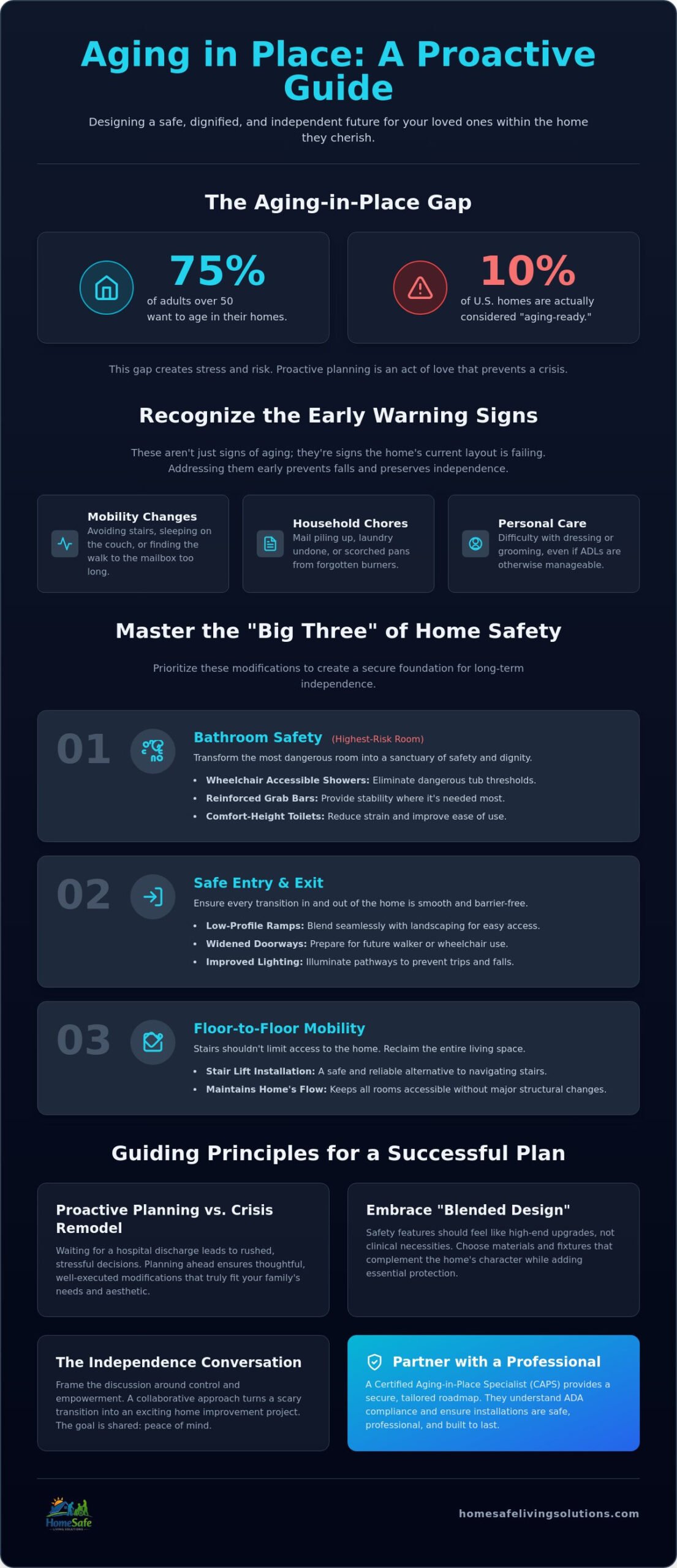
Did you know that 75% of adults over 50 want to stay in their current homes as they age, yet only 10% of U.S. houses are actually considered aging-ready? This gap often leaves families feeling caught between their parents’ wishes and the terrifying reality of a potential fall. The journey of planning for aging in place for my parents often begins with a quiet worry about a steep staircase or a slippery tub. You want your loved ones to remain independent, but the technical requirements of ADA compliance can feel overwhelming and cold. It’s natural to feel a bit of guilt when you can’t be there 24/7, but home should always feel like a sanctuary, not a clinical facility.
We believe that proactive safety is an act of love that preserves dignity. You’ll discover how to proactively design a safe, dignified, and independent future for your parents within the home they love. This guide provides a clear roadmap for home modifications that offer peace of mind without sacrificing your home’s unique character. We will explore how tailored changes, from bathroom accessibility to mobility solutions, can blend beautifully into the living space while providing the professional-grade protection your family deserves.
Key Takeaways
- Recognize early red flags, such as household chores piling up or mobility changes, to determine the right time to begin your journey.
- Master the “Big Three” of home safety by prioritizing bathroom modifications, entry access, and floor-to-floor mobility for long-term independence.
- Discover how planning for aging in place for my parents can use “Blended Design” to keep the home’s aesthetic beautiful while adding essential safety features.
- Learn why partnering with a Certified Aging-in-Place Specialist (CAPS) provides a more secure and tailored roadmap than a DIY approach.
- Gain peace of mind by understanding the technical requirements of ADA-compliant remodels and professional stair lift installations.
Assessing the Needs: When to Start Planning for Your Parents to Age in Place
Starting the process of planning for aging in place for my parents isn’t about admitting defeat; it’s about securing their future. Most families wait for a hospital discharge to start looking at home modifications, but that “crisis remodel” is often stressful and rushed. By taking a proactive approach, you ensure your parents stay in the environment they love while maintaining their dignity. For a comprehensive overview of aging in place, it’s helpful to understand that this concept is about more than just staying home. It’s about staying safe, healthy, and connected to the community.
It’s vital to distinguish between Activities of Daily Living (ADLs) and home-based mobility. A parent might be physically capable of dressing or grooming themselves, yet still find their house has become an obstacle course. Look for subtle red flags. Is the mail piling up because the walk to the box feels too long? Do you see scorched pans that suggest forgotten burners? Perhaps they’ve started sleeping on the couch simply to avoid the second floor. These aren’t just signs of aging; they’re signs that the home’s current layout is failing them. Addressing these issues early prevents the physical and emotional trauma of a fall.
The Independence Conversation: Talking to Your Parents
Frame the discussion around control. Tell them, “I want to make sure you never have to leave this house.” Use peace of mind as your shared family goal. When you involve your parents in choosing the look of an ADA remodel or the finish of a new safety rail, they feel empowered rather than managed. This collaborative approach turns a scary transition into a home improvement project they can actually get excited about.
Evaluating the Home’s Current Layout
Walk through the home together to spot high-risk zones. Check for loose rugs, high thresholds, and dim lighting in hallways. Assess their floor-to-floor mobility. If the stairs have become a “no-go zone,” a professional Stair Lift Installation can reopen the entire house to them. Peace of mind begins here, with a simple audit of the physical barriers standing in the way of their comfort.
Essential Home Modifications for Long-Term Safety and Comfort
Prioritizing the “Big Three” is the most effective way to start your journey. This includes bathroom safety, entry access, and floor-to-floor mobility. Implementing non-slip flooring and widened doorways now prepares the home for future walker or wheelchair use without requiring a second renovation later. Smart home technology also plays a vital role, though balancing these new devices with advice from Radiation-Free Living can help ensure the environment remains healthy and free from excessive electrosmog. Voice-activated lighting and emergency alert systems ensure that help is always within reach, even if a phone isn’t. These tailored solutions provide the stability your family needs to feel confident every day.
The Bathroom: Transforming the Highest-Risk Room
The bathroom is statistically the most dangerous room in any house. A Wheelchair Accessible Shower serves as the cornerstone of a safe ADA Remodel, as it removes the dangerous threshold of a traditional tub. Combining this with comfort-height toilets and strategically placed, reinforced grab bars creates a Handicap Accessible Bathroom that prioritizes dignity and independence. The official guide to aging in place highlights how these specific modifications significantly reduce the risk of debilitating falls.
Overcoming Mobility Barriers with Stair Lifts and Ramps
Stairs shouldn’t limit your parents to a single floor. A professional Stair Lift Installation is often a superior alternative to a first-floor bedroom conversion because it maintains the home’s original flow and keeps every room accessible. For exterior access, low-profile entry ramps can be designed to blend beautifully with the existing curb appeal. Every Aging in Place Home Modification should be handled with professional craftsmanship to ensure it meets regulatory requirements. If you’re ready to explore these options, a tailored Aging in Place Home Modification plan can provide the clarity you need to move forward.
Executing the Plan: Professional Assessments and Local Oregon Resources
Planning for aging in place for my parents reaches its most critical stage during the execution phase. This is when your vision for a safer home transforms into reality through professional expertise. While many household projects are suitable for a weekend DIY approach, critical safety features like a Stair Lift Installation require the precision of a specialist. A professional ensures that the equipment is anchored correctly and meets all safety standards. This prevents mechanical failures or structural issues that could lead to injury. Peace of mind begins here, with the knowledge that every modification is built to last.
Partnering with a Certified Aging-in-Place Specialist (CAPS) adds a layer of security to your project. These professionals are trained to understand the unique needs of seniors and the technical requirements of an ADA Remodel. They also help navigate the complex world of local building permits in cities like Portland and Eugene. Each municipality has its own specific codes, and local expertise ensures your project stays compliant. Creating a clear timeline for these modifications is essential. It helps minimize disruption to your parents’ daily routines, ensuring the transition is as smooth and stress-free as possible.
The Value of a Professional Home Safety Assessment
A specialized aging-in-place home modification consultation is the first step toward a safer environment. During this visit, an expert identifies hidden risks that family members often overlook, such as the height of a kitchen counter or the swing direction of a door. As noted in the National Institute on Aging guide, assessing your home’s current state is vital for long-term success. You’ll receive a tailored plan that addresses current mobility challenges while preparing for future needs.
Finding Trusted Accessibility Contractors in Oregon
Vetting contractors is about more than just checking prices. You need a team with specific experience in Handicap Accessible Bathroom renovations and structural changes. Local expertise in Portland, Gresham, and Sandy is invaluable for ensuring your project meets regional safety codes and regulatory requirements. When you’re ready to take the next step, our team provides comprehensive ADA Remodel services designed to restore independence. We treat every home with honor, ensuring our craftsmanship supports your family’s comfort for years to come.
Secure Their Future and Your Peace of Mind
Transitioning from worry to action is the greatest gift you can give your family. By identifying red flags early and prioritizing modifications like accessible bathrooms or stair lifts, you’re building a foundation of lasting independence. Planning for aging in place for my parents doesn’t have to be a clinical or cold process. It’s an opportunity to enhance their sanctuary with craftsmanship that respects their personal style while providing the security they deserve.
Peace of mind begins here, with a strategy tailored to your parents’ unique needs and your home’s character. Mate and his team are led by a Certified Aging-in-Place Specialist (CAPS) who specializes in blended designs that maintain the warmth of a family home. We’re proud to serve Portland, Eugene, and surrounding Oregon communities with professional excellence and local heart. You’ve seen the roadmap; now it’s time to put the plan into motion.
Take the first step toward a safer, more dignified future today. Schedule a Free Home Safety Assessment with Mate and his team to discover how we can help your loved ones stay right where they belong. You don’t have to navigate this journey alone; we’re here to help you protect what matters most.
Frequently Asked Questions
Is it realistically possible for my parents to age in place in a two-story home?
Yes, it’s absolutely possible for your parents to remain in their two-story home with the right modifications. A professional stair lift installation is the most common solution, allowing them to travel between floors without the risk of a fall. By making these tailored changes, you avoid the need to convert a living room into a bedroom. This helps maintain the home’s original flow and keeps every room accessible for years to come.
What are the most important first steps in planning for aging in place?
The most important first step in planning for aging in place for my parents is a comprehensive home safety assessment. This process identifies immediate hazards like slippery floors or poor lighting. You should also have an open conversation with your parents about their daily routines. Involving them in the planning ensures the final design reflects their personal style and needs while providing long-term security and dignity.
How much do typical aging-in-place home modifications cost?
Costs for home modifications vary significantly based on the scope of the project and the specific needs of the family. While basic upgrades are relatively affordable, more extensive projects like a handicap accessible bathroom involve a larger investment. When planning for aging in place for my parents, it’s helpful to remember that these improvements are often more cost-effective over time when compared to the ongoing monthly expenses of assisted living facilities.
Will ADA-compliant remodels decrease the resale value of my parents’ home?
High-quality ADA-compliant remodels shouldn’t decrease a home’s resale value, especially when using a “Blended Design” approach. When safety features are integrated with premium craftsmanship, they look like high-end upgrades rather than medical additions. As the 65+ population continues to grow, homes that are already aging-ready are becoming increasingly desirable for future buyers. Professional modifications that blend beautifully into the home can actually be a significant selling point for many families.