
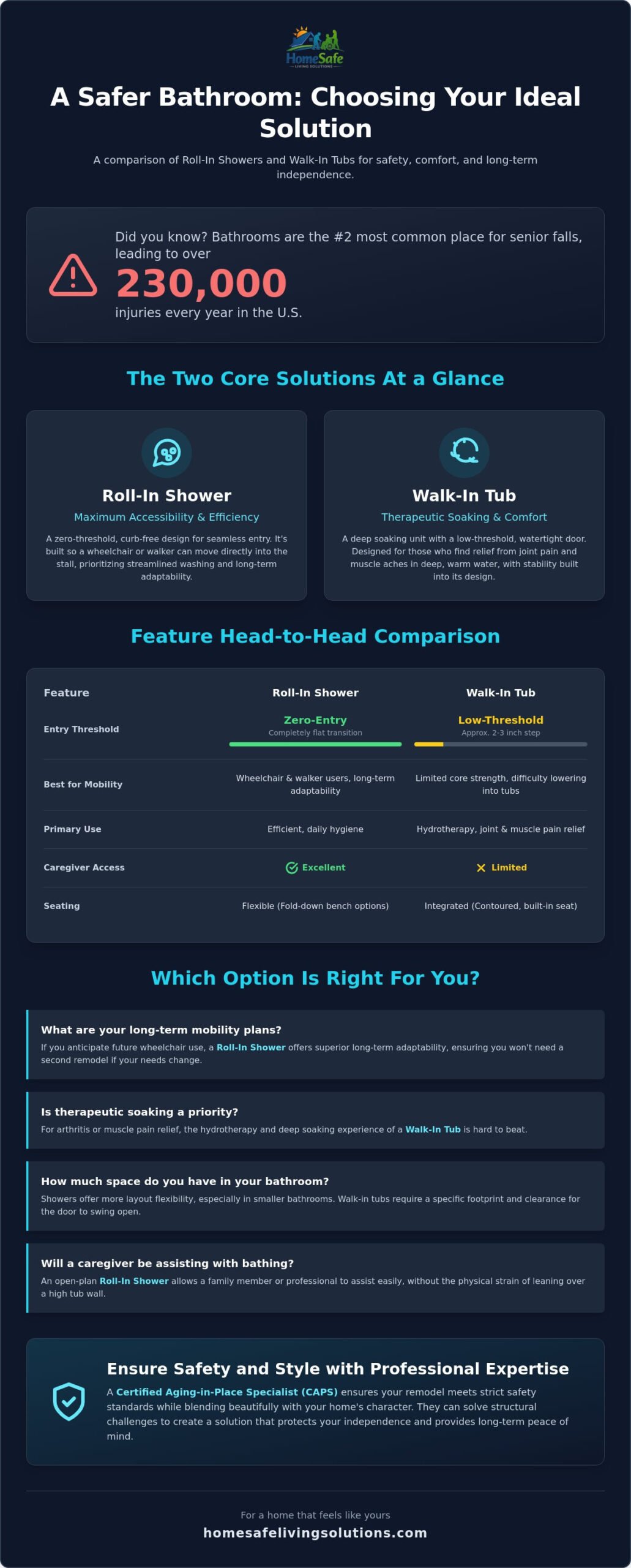
Did you know that bathrooms are the second most common place for seniors to fall, resulting in more than 230,000 injuries every year? This startling reality can turn a place of relaxation into a source of constant worry. If you’re researching walk-in tub alternatives to prevent these accidents, you’re already taking a vital step toward protecting your independence. You deserve a space that offers both professional-grade safety and the warmth of a personal sanctuary without looking like a clinical facility.
Deciding on the right modification involves looking at your specific mobility needs and how you use your space in the Portland and Gresham area. Mate and his team of Certified Aging-in-Place Specialists understand that peace of mind begins with a home that feels like yours. Whether you require a wheelchair-accessible shower or a specialized tub, the goal is a tailored fit that blends beautifully with your home’s character.
This guide compares roll-in showers and walk-in tubs across safety, utility, and layout requirements. You’ll discover which accessibility solution will best protect your home and provide the long-term comfort you and your family deserve.
Key Takeaways
- Learn the fundamental differences between zero-threshold roll-in showers and deep-soaking walk-in tubs to find the right fit for your home.
- Discover why a roll-in shower is one of the most effective walk-in tub alternatives for those planning for long-term wheelchair use.
- Understand how your bathroom’s footprint and maneuvering space dictate whether a tub or a shower modification is more practical for your layout.
- Find out how a Certified Aging-in-Place Specialist (CAPS) can help you plan a remodel that meets strict safety standards while blending beautifully into your home’s character.
- Identify the specific design choices that restore your independence and provide the long-term peace of mind your family deserves.
Comparing the Basics: Roll-In Shower vs. Walk-In Tub
Every home modification should start with a single focus: your safety. When you begin looking at walk-in tub alternatives, the primary goal is almost always to eliminate the dangerous step-over required by standard bathtubs. Traditional tubs often have high walls that become major tripping hazards as our mobility changes. By removing this barrier, you significantly reduce the risk of the 230,000 bathroom-related injuries that occur each year. However, the best choice for your home depends on whether you prefer a therapeutic soak or a streamlined washing experience.
A roll-in shower is a zero-threshold, curb-free design that allows for seamless entry. It’s built so that a wheelchair or walker can move directly into the stall without any lifting or stepping. In contrast, a walk-in tub is a deep soaking unit featuring a watertight door and a very low entry point. While the shower prioritizes efficiency and seated washing, the tub is designed for those who find relief for their joints in deep, warm water. Both options are vital components of modern accessible bathroom design, but they serve different physical needs.
Key Features of a Roll-In Shower
The zero-entry transition is the most essential feature of this design. It creates a flat surface from the bathroom floor into the shower, which is critical for preventing trips and falls. Mate and his team ensure these modifications don’t look like hospital equipment; instead, we use integrated grab bars and slip-resistant flooring designed to blend beautifully with your existing home decor. These showers are highly versatile and often include customizable seating options. Fold-down benches are a popular choice because they provide a stable place to sit when needed but can be tucked away to keep the space open for others.
Key Features of a Walk-In Tub
For many, the biggest draw of a walk-in tub is the hydrotherapy. These units are specifically built to provide soaking benefits that can help with arthritis, muscle aches, and circulation issues. Stability is built right into the design with a contoured seat, which is a blessing for those with limited core strength who might struggle to lower themselves into a standard tub. While it isn’t a zero-entry solution, the low-threshold door usually sits only 2 to 3 inches high. This small step is much more manageable than a traditional tub wall and provides a secure, watertight seal once you’re inside.
The Decision Framework: Which Option Fits Your Life?
Choosing the right accessibility solution requires looking beyond your current comfort. You must consider your mobility trajectory. If you currently use a walker but anticipate needing a wheelchair in the future, a roll-in shower provides a more adaptable environment. These walk-in tub alternatives ensure you won’t need a second remodel if your needs change down the road. Caregiver support also plays a vital role in this decision. While a tub is an enclosed space, an open shower allows a family member or professional to assist with bathing without the physical strain of leaning over a high tub wall.
Your decision should also balance therapeutic benefits against daily hygiene habits. If chronic arthritis makes deep heat a priority, the soaking experience of a tub is hard to beat. However, if your goal is maintaining dignity through independent, efficient washing, a shower is often the superior choice. Following the ADA guidelines for roll-in showers ensures that your space is not only safe but also fully compliant with modern accessibility standards, providing stability you can trust.
Space and Structural Requirements
Many older homes in Portland present unique challenges, such as outdated plumbing or complex floor joist configurations. Installing a zero-entry shower often requires recessing the floor to create a flush transition, which can be tricky in historic structures. In smaller bathrooms common in Gresham and Clackamas, every inch of the footprint counts. You must compare the swing radius of a tub door with the open entry of a shower to see which fits your layout. A handicap bathroom remodel tailored to your specific home structure can solve these structural puzzles while keeping the space beautiful.
Maintenance and Long-Term Value
Think about the daily upkeep of your new fixture. Acrylic tub surfaces are generally easier to wipe down than the tile grout found in many custom showers. However, professional aging-in-place modifications often increase home marketability rather than detracting from it. A well-designed, accessible bathroom is a valuable asset that appeals to a wide range of future buyers who value safety and high-quality craftsmanship. By choosing a modification that blends into your home’s character, you protect both your physical safety and your financial investment.
Professional ADA Remodeling: Ensuring Long-Term Freedom
Professional installation is the foundation of any successful home modification. It goes beyond simple placement; it involves complex engineering to prevent structural leaks and ensure full ADA compliance. Mate Skoro, as a Certified Aging-in-Place Specialist (CAPS), looks at your home through a lens of long-term utility. A comprehensive home assessment is vital before selecting any walk-in tub alternatives, as it ensures the solution fits both your physical needs and your home’s unique plumbing and footprint.
Many families worry that safety modifications will strip their home of its warmth. At HomeSafe Living Solutions, we focus on designs that blend beautifully into your existing decor. We select high-quality materials that offer security while maintaining the personal sanctuary of your family home. This tailored approach ensures that your bathroom remains a place of dignity rather than a clinical space.
The HomeSafe Living Solutions Process in Portland and Beyond
Our team provides dedicated support across Portland, Gresham, Sandy, and Clackamas, delivering results that restore confidence. We manage every phase of the project to ensure a handicap accessible bathroom that feels like a natural part of your home. Professional craftsmanship in ADA projects turns a potentially stressful renovation into a reliable, long-term improvement that protects your family’s future.
Peace of Mind Begins Here
The emotional relief that comes with a safe bathing environment is profound for both homeowners and their loved ones. By removing the fear of a fall, we help you reclaim your daily routine and your independence. True peace of mind begins here, in a space designed with compassion, expertise, and a commitment to your long-term comfort.
Take the First Step Toward a Safer Home
Choosing between a roll-in shower and a walk-in tub is a personal decision that shapes your daily comfort and long-term security. We’ve explored how zero-entry showers provide essential wheelchair access while walk-in tubs offer unique therapeutic soaking benefits. The most effective walk-in tub alternatives are those that prioritize your specific mobility needs without making your bathroom feel like a medical facility.
Mate Skoro and his team specialize in professional ADA remodels that blend these life-changing safety features beautifully into your home’s character. As a Certified Aging-in-Place Specialist (CAPS), Mate ensures every modification is technically sound and tailored to your family’s needs. You don’t have to face these complex decisions alone; expert guidance is just a conversation away.
Peace of mind begins here, with a partner who values your dignity as much as your safety. Schedule Your Free Home Accessibility Assessment Today to protect your independence and start enjoying your home with renewed confidence.
Frequently Asked Questions
Is a roll-in shower more expensive than a walk-in tub?
The cost comparison between these two options depends heavily on your existing plumbing and the structural needs of your bathroom floor. Generally, both solutions fall within a similar price range for professional installation. While showers often require more floor work to create a flush, zero-entry transition, they are frequently seen as the most versatile walk-in tub alternatives for long-term accessibility. Your choice should focus on which modification provides the greatest safety for your specific mobility level.
Can a wheelchair fit into a walk-in tub?
Standard walk-in tubs are not designed to accommodate a wheelchair inside the unit itself. Instead, they are built for a seated transfer where the user moves from a chair or walker onto a contoured, built-in seat. If you require a solution that allows you to roll directly into the bathing area without leaving your wheelchair, a roll-in shower is the only modification that provides that level of seamless access. This ensures maximum independence and safety for those with limited lower-body mobility.
Do I need to upgrade my water heater for a walk-in tub?
You might need to increase your hot water capacity because walk-in tubs often hold between 50 and 80 gallons of water. This is significantly more than a standard tub, which can quickly exhaust a smaller or older water heater. During a professional assessment, Mate and his team evaluate your current system to ensure you can enjoy a full, warm soak without the water turning cold. Upgrading your heater ensures the therapeutic benefits of your new tub are always available when you need them.
How long does a handicap-accessible bathroom remodel take?
A professional bathroom modification typically takes between one and two weeks to complete from start to finish. The exact timeline depends on whether we need to move plumbing lines or adjust floor joists to meet ADA requirements for a roll-in shower. Our team works efficiently to minimize the disruption to your daily life while ensuring every detail is handled with professional craftsmanship. We prioritize a steady, reliable pace so you can regain your independence and peace of mind as soon as possible.
Will an ADA remodel decrease my home value?
Professional ADA modifications often maintain or increase home value by providing “universal design” features that appeal to a wide range of buyers. When safety features are designed to blend beautifully into your home character, they are viewed as high-quality upgrades rather than clinical additions. Many families today look for homes that are already prepared for aging-in-place, making your modification a valuable asset. A well-executed remodel protects your physical safety today and your financial investment for the future.