

Your home should be your sanctuary, a place where you feel most empowered and at ease, rather than a collection of barriers that limit your daily life. It’s completely normal to feel overwhelmed by the technical jargon of the 2026 Oregon Structural Specialty Code or to worry that necessary safety updates will make your beautiful living room look like a cold hospital wing. You deserve a local partner you can trust to handle the heavy lifting while respecting the unique character of your house. Finding the right path forward for home modifications for wheelchair users Oregon starts with the understanding that safety and beauty can live under the same roof.
This guide will show you how to transform your Oregon residence into a safe, dignified, and fully accessible sanctuary with our expert roadmap to home modifications. You’ll discover how to navigate the latest accessibility standards, explore local funding options like the Oregon K Plan, and learn why a tailored design is the key to lasting comfort. We’ll walk through everything from curbless showers to doorway widening, ensuring your family gains the peace of mind that comes with a home designed for everyone’s independence.
Key Takeaways
- Learn the critical measurements for doorway widening and bathroom safety to ensure effortless, dignified movement throughout every room.
- Discover the essential steps for home modifications for wheelchair users Oregon, from navigating the 2026 residential codes to securing the correct local permits.
- Explore the “blended design” philosophy that integrates high-quality craftsmanship with accessibility, ensuring your home never feels like a clinical environment.
- Identify local financial resources, including the Oregon K Plan and regional grants, that can help make your vision for a safer home a reality.
- Understand why a professional home assessment is the most vital first step in creating a tailored roadmap for your family’s long-term peace of mind.
Essential Home Modifications for Wheelchair Users in Oregon
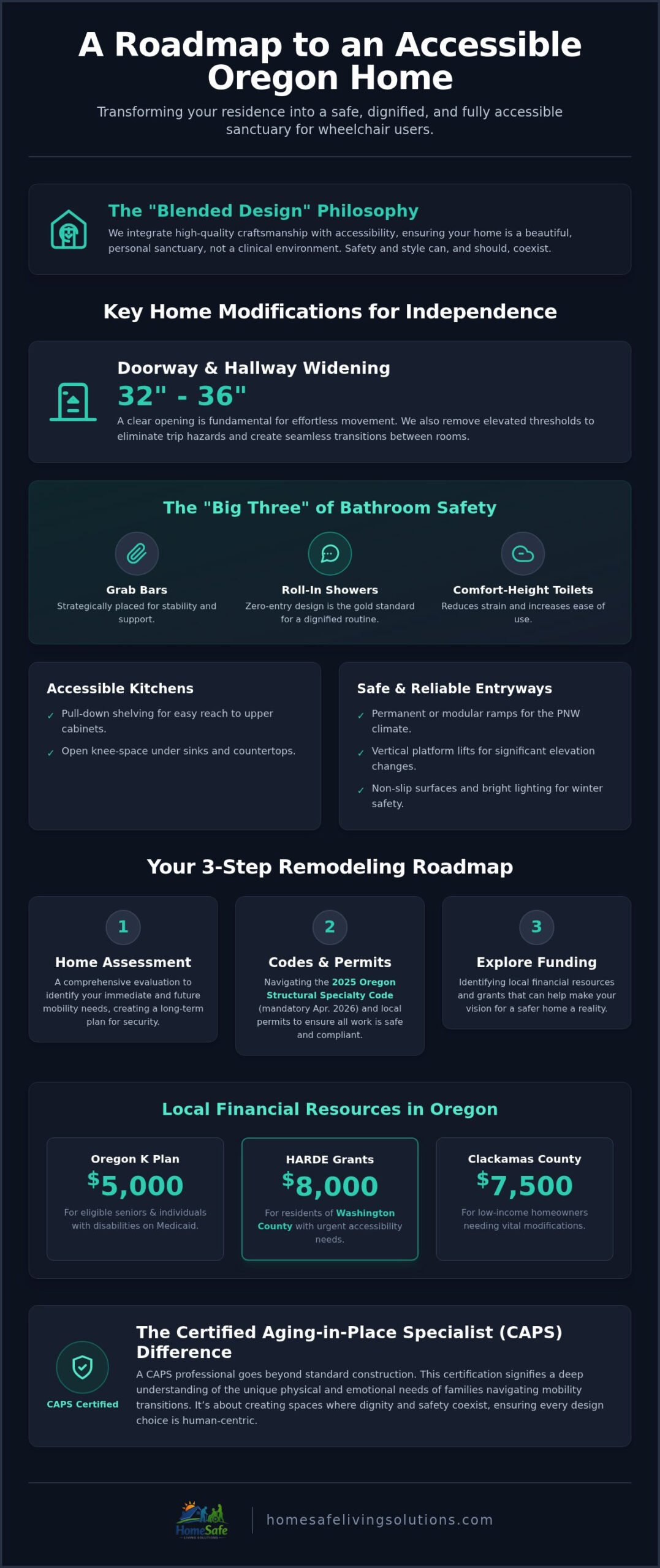
Creating a home that supports your mobility shouldn’t feel like moving into a medical facility. When we talk about home modifications for wheelchair users Oregon, we focus on changes that restore your independence while preserving the warmth of your personal sanctuary. It begins with the basics of movement, ensuring every room is reachable without struggle. Widening doorways to provide a clear 32-36 inch opening is a fundamental step, often paired with removing elevated thresholds between rooms to eliminate trip hazards. These updates align with broader accessible housing standards, which prioritize seamless transitions throughout the living space.
In the kitchen, we prioritize “blended” solutions like pull-down shelving and creating open knee-space under sinks. These changes allow you to prepare meals with ease and comfort. We also focus on the “Big Three” of bathroom safety: roll-in showers, strategically placed grab bars, and comfort-height toilets. By focusing on high-quality craftsmanship, these modifications become a natural extension of your home’s design. Peace of mind begins here, at the intersection of professional excellence and family comfort.
The Roll-In Shower: A Cornerstone of Independence
Zero-entry showers are the gold standard for safety and ease of use. By removing the curb, you eliminate the biggest barrier to a dignified morning routine. We integrate built-in seating and adjustable hand-held showerheads to ensure every shower is relaxing and secure. Modern tile choices and tailored finishes ensure your wheelchair accessible shower looks like a high-end spa feature, not a clinical necessity. It’s about restoring your routine without compromising your home’s style.
Entryway Solutions: Beyond the Standard Ramp
Your front door is your connection to the Oregon community, so your entryway needs to be reliable in all weather. We evaluate whether a permanent ramp or a modular system is best for our rainy Pacific Northwest climate. For homes with significant elevation changes, a vertical platform lift offers a compact, powerful solution. Safety requires more than just a path; we ensure your entry has non-slip surfaces and bright lighting to keep you secure during our dark, wet winters.
Planning Your Oregon Remodel: Permits, Standards, and Professionals
Starting a renovation project can feel like a heavy burden, but a clear plan transforms that weight into a manageable roadmap. The first step is always a comprehensive home assessment. This process identifies your immediate mobility needs while anticipating how those requirements might shift in the years to come. By looking ahead, we ensure that your home modifications for wheelchair users Oregon provide long-term security rather than a temporary fix.
In some cases, a home assessment might reveal that moving to a professional care environment is a more practical option than extensive remodeling. For those exploring the real estate market for such properties, the Assisted Living Real Estate Group offers specialized expertise in the sale and leasing of senior care facilities.
Understanding the legal landscape is the next hurdle. As of April 1, 2026, the 2025 Oregon Structural Specialty Code is the mandatory standard for all residential work. This code ensures that every ramp, widened doorway, and bathroom update is structurally sound and safe. In cities like Portland, Eugene, and Gresham, your contractor must pull the necessary building, electrical, and plumbing permits. This protects you from future liability and ensures the work meets rigorous local inspections.
Financing your vision is often more accessible than families realize. Several local programs offer support for these life-changing improvements:
- Oregon K Plan: Provides up to $5,000 for eligible seniors and individuals with disabilities on Medicaid.
- HARDE Grants: Washington County residents may qualify for up to $8,000 for urgent accessibility repairs.
- Clackamas County Grants: Low-income homeowners can access up to $7,500 for vital modifications.
If you’re unsure which path is right for your budget, starting with a Free Home Assessment can provide the clarity you need to move forward with confidence.
Why a CAPS Professional Makes the Difference
Mate Skoro is a Certified Aging-in-Place Specialist (CAPS), a designation that goes beyond standard construction training. This certification means our team understands the unique physical and emotional needs of families navigating a transition in mobility. We don’t just see a bathroom; we see a space where dignity and safety must coexist. Working with a local expert ensures your remodel reflects Oregon building trends while prioritizing the human element of every design choice.
Navigating Local Oregon Building Requirements
Oregon is home to beautiful historic neighborhoods, from Portland’s colonial styles to Eugene’s classic bungalows. Modifying these homes requires a delicate touch to ensure new features blend beautifully into the existing character. We handle all the paperwork and local inspections, allowing you to focus on your family. Peace of mind begins here, knowing that your modifications are designed to grow with your needs while respecting the history of your house.
Choosing the Right Accessibility Partner for Your Family
Selecting a contractor to handle your home’s transformation is a deeply personal decision. You need a partner who values your home as a sanctuary, not just a job site. Look for “Compassionate Expertise” that prioritizes your family’s needs over aggressive sales tactics. A truly professional team focuses on “blended design,” ensuring that every update, from widened hallways to structural supports, matches your home’s original character. This preserves the beauty of your residence while providing the necessary utility for daily life. Peace of mind begins here, when you know your home’s aesthetic is as important as its accessibility.
Craftsmanship is the foundation of a successful ADA remodel. When dealing with complex structural changes or a handicap bathroom remodel, experience matters. You want an owner-led team where personal accountability is at the core of the business. This ensures that the quality of work is a matter of personal honor rather than just a checklist. When a business is person-led, you gain a reliable neighbor who stays involved from the first consultation to the final inspection. This level of oversight is vital for ensuring that every modification meets the highest standards of safety and durability.
The HomeSafe Living Solutions Approach
Mate and his team prioritize your security from day one. Our approach to home modifications for wheelchair users Oregon is rooted in empathy and professional excellence. We don’t just install fixtures; we create life improvements that restore dignity and independence. By adhering to the 2026 standards for accessible living, we ensure your home is safe, functional, and beautiful. Every project is tailored to the individual, ensuring that the final result feels like a natural part of your family’s life.
To ensure your home feels truly move-in ready after the dust of renovation has settled, many families opt for professional cleaning services. For those in regions like Sacramento, Allora Cleaning specializes in post-construction and residential cleaning, providing the finishing touch that transforms a construction site back into a comfortable sanctuary.
Starting Your Journey Toward Independence
Taking the first step toward a safer home shouldn’t be a stressful ordeal. During your Free Home Assessment, we listen to your concerns and identify the most impactful changes for your specific layout. We respect your space and work diligently to minimize disruption to your daily life during the renovation process. Our goal is to make the transition as smooth as possible for everyone in the household. If you’re ready to reclaim your independence and protect your home’s future, Schedule your consultation today.
Reclaim Your Independence and Peace of Mind Today
Transforming your home is about more than just meeting code; it’s about restoring your dignity and ensuring your sanctuary remains a place of comfort. We’ve explored how essential updates like roll-in showers and wider doorways can blend seamlessly into your home’s existing character. By understanding the 2026 Oregon building standards and identifying local funding sources like the Oregon K Plan, you’ve already started the journey toward a safer future. Investing in home modifications for wheelchair users Oregon is a powerful way to protect your long-term independence while providing your family with the security they deserve.
Since 2021, Mate Skoro and his team have served families across Portland, Eugene, and surrounding areas with specialized ADA-compliant craftsmanship. As a Certified Aging-in-Place Specialist (CAPS), Mate brings a level of personal accountability and expertise to every whole-home remodel or bathroom project. You don’t have to navigate these technical requirements alone. Peace of mind begins here, with a partner who values your home’s beauty as much as its safety. Take the first step toward a more accessible life and Get Your Free Home Accessibility Assessment today. We’re ready to help you create a home that truly supports your journey.
Frequently Asked Questions
Do I need a permit for a wheelchair ramp in Oregon?
Yes, most permanent wheelchair ramps in Oregon require a building permit to ensure they meet specific safety standards for slope and stability. Your contractor should handle this paperwork, as Oregon law requires CCB-licensed professionals to apply for permits for the work they perform. This process ensures your ramp is safe for use, especially during our wet Pacific Northwest winters when slip resistance is vital.
How wide should a bathroom be for a wheelchair user?
A truly accessible bathroom should provide at least 60 inches of clear floor space to allow for a full 360-degree turn in a wheelchair. While the standard minimum clear width for an accessible route in Oregon is 36 inches, providing extra room around the toilet and shower is essential for safety and dignity. We focus on these precise measurements during our home assessment to ensure your daily routine remains effortless.
What is the difference between Universal Design and ADA compliance?
ADA compliance refers to a specific set of legal regulations, while Universal Design is a broader philosophy focused on making a home usable for everyone regardless of age or ability. Universal Design features, like lever door handles and zero-step entries, are designed to blend beautifully into your home without a clinical appearance. Both approaches are vital when planning home modifications for wheelchair users Oregon to ensure long-term comfort and style.
Can a walk-in shower be installed in any Oregon home?
Most Oregon homes can accommodate a walk-in or roll-in shower, though the specific installation depends on your existing plumbing and floor structure. We perform a detailed structural assessment to determine if your floor can be lowered for a true zero-entry design or if a low-profile threshold is a better fit. Our team prioritizes high-quality craftsmanship to ensure your new shower is both a safe sanctuary and a beautiful addition to your home.
How much do home modifications for wheelchair users typically cost?
The cost of accessibility updates varies widely based on the complexity of the structural changes and the specific materials you select for your project. Factors such as plumbing relocations for a new shower or the extent of doorway widening will influence the total investment required. We recommend starting with a professional consultation to identify the most effective way to meet your needs while respecting your family’s budget and long-term goals.
Are there Oregon state grants available for home accessibility?
Yes, several programs offer financial support, including the Oregon K Plan for Medicaid recipients and regional grants in Washington and Clackamas counties. Veterans may also be eligible for specific HISA or SAH grants through the VA to help cover the costs of essential updates. We help families explore these resources to ensure that home modifications for wheelchair users Oregon are accessible and manageable for those who need them most.