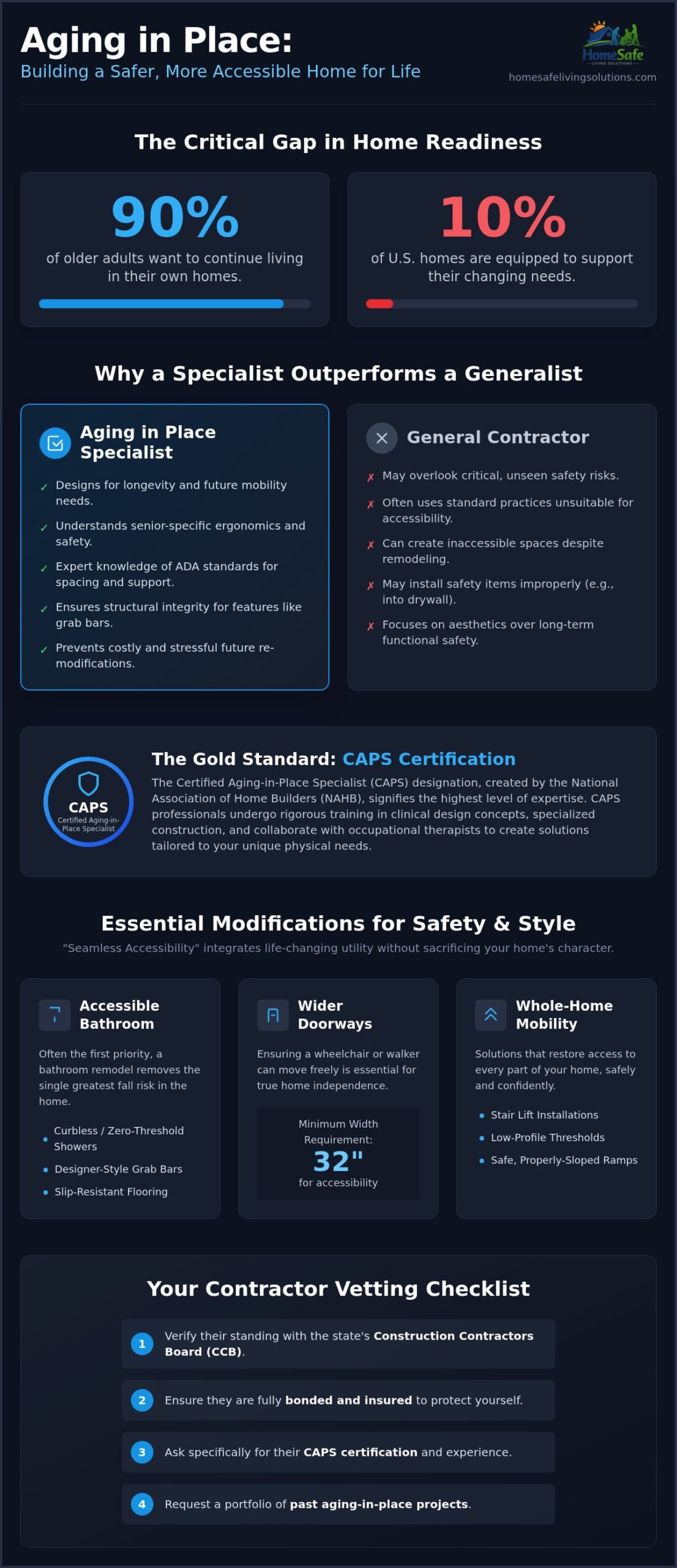
Did you know that while over 90% of older adults prefer to stay in their current homes, only 10% of houses in the U.S. are actually equipped to handle their needs? It’s a stressful reality that often leads to a frantic search for aging in place contractors who can bridge the gap between safety and style. You likely worry that necessary modifications will make your home feel like a clinical facility or, worse, that a contractor might ignore critical ADA guidelines. We understand that your home is your sanctuary, and the thought of losing that independence is overwhelming.
Peace of mind begins with knowing you have the right experts by your side. This guide will show you exactly how to identify and vet specialists who blend professional craftsmanship with genuine empathy. We’ll walk through the essential certifications to look for, the right questions to ask about accessibility codes, and how to ensure your modifications protect both your safety and your home’s long-term value. You don’t have to settle for cold, utilitarian designs when you can have a home that is both safe and beautiful.
Key Takeaways
- Learn why specialized aging in place contractors with CAPS certification offer a higher level of expertise than general handymen for senior-specific ergonomics.
- Discover the philosophy of “Seamless Accessibility” to ensure your home modifications provide safety without sacrificing the character or resale value of your sanctuary.
- Understand how handicap bathroom remodels and wheelchair-accessible showers can restore your dignity and daily independence.
- Get a step-by-step checklist for verifying local credentials and Oregon CCB standing to protect yourself from “cowboy” builders.
- Find out how a Free Home Assessment identifies hidden household risks to create a tailored plan for your lifelong comfort.
Why Specialized Aging in Place Contractors Beat General Handymen
Choosing someone to modify your home is a decision rooted in trust. While a general handyman might be great for fixing a leaky faucet, aging in place contractors are specialized technical experts. They don’t just build; they design for longevity by merging ADA regulatory standards with senior-specific ergonomics. Understanding what aging in place means is the first step toward creating a sanctuary that evolves with you. Specialized knowledge is required for structural ADA modifications because standard building practices often fail to account for the specific weight-bearing and spatial clearance requirements of mobility-impaired residents.
Hiring a specialist mitigates serious safety risks that generalists often overlook. For instance, a standard contractor might screw a grab bar into drywall without proper blocking; a specialist ensures it’s anchored to withstand hundreds of pounds of sudden pressure. They also understand that a ramp with a slope even slightly too steep can become a dangerous barrier rather than a helpful tool. These details are the difference between a house that’s simply “modified” and a home that’s truly safe.
Understanding the CAPS Certification
The National Association of Home Builders (NAHB) created the Certified Aging-in-Place Specialist (CAPS) designation as the industry gold standard. To earn this, professionals like Mate Skoro complete rigorous coursework covering clinical design concepts and specialized construction solutions. These experts often collaborate with occupational therapists to ensure that a Handicap Accessible Bathroom or kitchen isn’t just built to code but is tailored to your specific physical reach and strength. It’s a holistic approach to home safety.
The Hidden Costs of “General” Remodeling
Standard bathroom layouts are designed for able-bodied users, often featuring narrow doorways and cramped clearances. A general contractor might install a beautiful new tile floor, but if they don’t widen the entry to the required 32 inches, the room remains inaccessible to a wheelchair. Specialized aging in place contractors look at your progressive mobility needs. They build for the person you are today and the person you will be in ten years, saving you from the stress and expense of having to redo the work later.
Essential Modifications: Blending Safety with Home Aesthetics
One of the biggest fears seniors face is that their home will start to look like a clinical facility. Top-tier aging in place contractors understand that safety doesn’t have to be ugly. The philosophy of “Seamless Accessibility” focuses on modifications that provide life-changing utility while maintaining the warmth and character of your residence. Integrating safety features that disappear into the decor preserves the dignity of the home environment while providing constant, silent protection.
The Accessible Bathroom Evolution
A Handicap Bathroom Remodel is often the first priority for families. Transitioning from a high-walled tub to a Wheel Chair Accessible Shower removes a major fall risk that causes thousands of injuries each year. Modern designs include semi-ambulatory seating and strategically placed grab bars that often look like designer towel racks. Because curbless showers require precise sloping for water mitigation, professional craftsmanship is vital to prevent leaks and floor damage. When planning these home safety modifications, focus on materials that offer both slip resistance and high-end style.
Whole-Home Mobility Solutions
Independence means having full access to every room in the house. A professional Stair Lift Installation can restore access to a second-floor bedroom, effectively doubling your usable living space without the need for a stressful move. Widening doorways to at least 32 inches and installing low-profile thresholds also ensure that walkers and wheelchairs move freely throughout the home. These changes create a fluid environment where you can navigate with confidence. To see how these features can be tailored to your specific layout, you can explore our approach to home transformations. Our goal is to make these updates feel like a natural part of your home’s story.
Finding and Vetting Your Eugene Aging in Place Specialist
Vetting aging in place contractors requires more than just checking a general license. In Oregon, you must verify their standing with the Construction Contractors Board (CCB) to ensure they are bonded, insured, and maintain a clean record. Beyond legalities, prioritize specialists who offer a Free Home Assessment. This initial visit is vital because it identifies unique household risks that a standard quote might miss. While you review your options, it’s helpful to consider the financial considerations for aging in place to ensure your project remains a sustainable investment for your family.
When interviewing a potential partner, ask direct questions to gauge their specific expertise. How many ADA-compliant bathrooms have you completed this year? Can you explain how you ensure proper water drainage in a curbless shower? A local specialist like HomeSafe Living Solutions brings this specific Eugene-based expertise to every project, ensuring your home remains a sanctuary of independence. Peace of mind begins here, with a partner who treats your safety as a matter of personal honor.
The Local Eugene Planning Process
Navigating building permits in Eugene or Portland can be complex for structural accessibility changes. A contractor who knows local codes can expedite the process while ensuring every modification meets safety standards. They also understand the unique architecture of Pacific Northwest homes. This knowledge allows them to blend safety features into craftsman or mid-century styles without clashing with your existing decor.
Checklist for Your First Consultation
During your first meeting, pay close attention to the contractor’s empathy and communication style. Do they listen to your concerns, or do they push a one-size-fits-all solution? A reliable quote should be transparent and detailed. Ensure it includes:
- Specific safety hardware and models for your ADA Remodel.
- Verification of ADA compliance for all height and width modifications.
- A clear timeline that respects your daily routine and privacy.
- Details on how they will manage dust and debris during a Handicap Bathroom Remodel.
Choose a professional who views the project as a life improvement rather than just a construction job. This ensures the final result restores your dignity and allows you to stay in the home you love.
Secure Your Independence and Peace of Mind
Transforming your house into a lifelong sanctuary is about more than just hardware; it’s about restoring your dignity and daily freedom. You’ve learned that the right aging in place contractors do more than just install equipment. They use CAPS-certified expertise to blend essential ADA safety features with the existing beauty of your home. By choosing a specialist who understands both the technical requirements of a handicap bathroom remodel and the emotional value of your personal sanctuary, you protect your future and your property value. Peace of mind begins here, in a home that evolves alongside your needs.
Since 2021, our team has helped families across Eugene, Portland, and surrounding communities navigate these vital changes with compassion and professional excellence. Mate and his team are ready to help you turn a stressful transition into a clear, manageable plan for long-term comfort. Don’t wait for a fall to make your home safer. Take the first step toward a more secure tomorrow today. Schedule Your Free Home Assessment with Mate and the HomeSafe Team to see how we can help you stay in the home you love for years to come. Your independence is worth protecting.
Frequently Asked Questions
What is the difference between a general contractor and an aging-in-place specialist?
An aging-in-place specialist focuses on the intersection of healthcare needs and construction, whereas a general contractor primarily handles standard aesthetic or structural repairs. Specialized aging in place contractors are trained in universal design principles that anticipate future mobility changes. They understand specific requirements like the exact height for grab bar placement and the necessary turning radius for a wheelchair, ensuring the home is safe for long-term use rather than just looking refreshed.
How much do typical aging-in-place home modifications cost in Oregon?
Costs for home modifications in Oregon vary widely based on the scope of the project and the specific materials you choose for your sanctuary. While a simple grab bar installation is a minor update, a full Handicap Bathroom Remodel or a structural change like widening multiple doorways represents a more significant investment in your independence. We recommend starting with a professional assessment to get a tailored estimate that reflects your home’s unique layout and your specific mobility goals without any guesswork.
Will ADA remodeling decrease my home’s resale value?
Professionally executed accessibility modifications often maintain or even increase a home’s resale value by appealing to the growing demographic of buyers looking for “forever homes.” When aging in place contractors use universal design principles, the results look like high-end upgrades rather than clinical additions. Features like curbless showers and wider doorways are increasingly sought after for their sleek, open-concept aesthetic and functional convenience for people of all ages and abilities.
Can I get financial assistance or tax credits for home accessibility modifications?
Several programs can help offset the costs of making your home safer, including VA HISA grants for veterans and certain Medicaid HCBS waivers. Some Medicare Advantage plans have also begun covering specific safety modifications as supplemental benefits. Additionally, if a physician prescribes the work as a medical necessity, you might be able to claim the expenses as a tax deduction. It’s best to consult with a financial advisor or the specific agency to confirm your eligibility for these local and federal resources.