The quickest way to pay for an accessibility project may not be the best fit for your household. When you’re considering financing a home accessibility remodel, it’s understandable to have questions about the project scope, which funding sources may apply, and whether repayments could strain your budget. Start by identifying the changes that support safety and independence, then compare funding options with your needs and eligibility in mind.
This guide covers potential options, including loans, public assistance, insurance or tax considerations, and savings. It also explains how to compare repayment, timing, and qualification requirements. Clarifying priorities and the project scope before committing can help you plan with greater confidence.
A clear project plan can identify the changes that matter most, whether that means a wheelchair-accessible shower, an accessible kitchen or bedroom, or another aging-in-place modification. HomeSafe Living Solutions provides ADA remodeling and accessibility modifications for households in Clackamas, Wilsonville, West Linn, Oregon City, and Tualatin. The right plan can support comfort and independence while helping your home feel like home.
Key Takeaways
- Funding choices depend on the project, household finances, and eligibility; consider savings, borrowing, public assistance, and applicable benefits.
- Before financing a home accessibility remodel, compare repayment terms, fees, collateral, eligibility, and when funds will be available.
- Identify the access barriers and prioritize the changes that matter most to safety, comfort, and independence.
- A defined project scope helps you compare funding options against the work your home needs.
Financing a Home Accessibility Remodel: What Funding Paths May Fit?
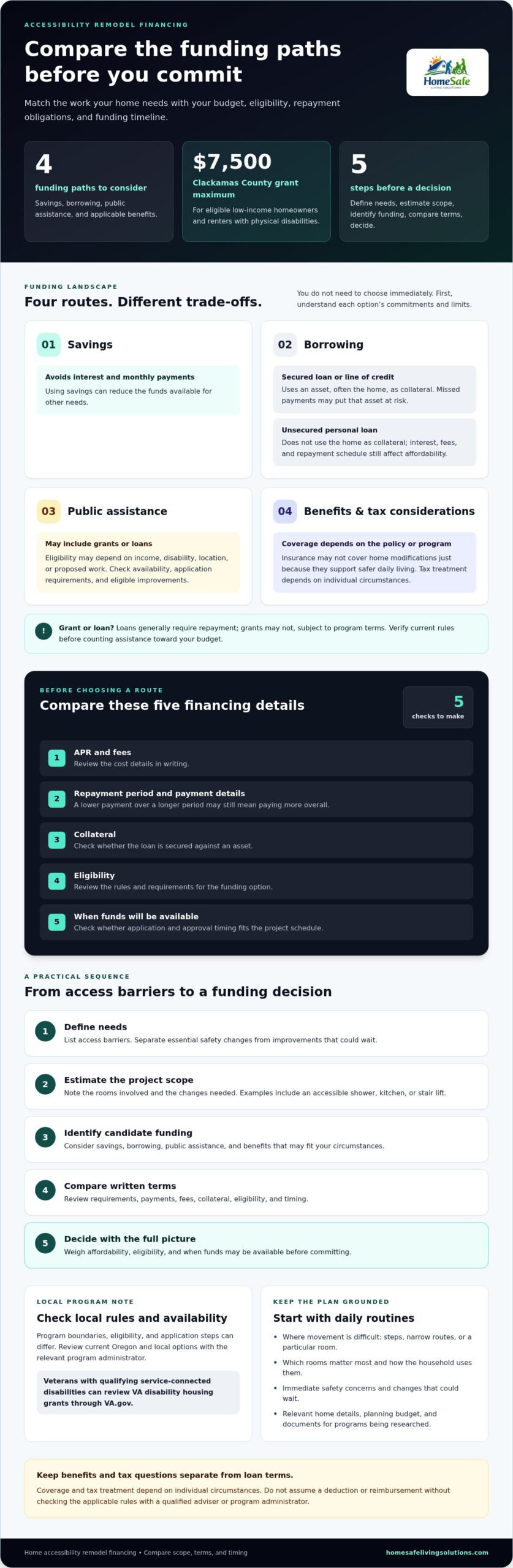
Funding choices depend on the work your home needs, your household’s finances, and the eligibility rules attached to each option. Start by considering four broad paths: savings, borrowing, public assistance, and benefits that may apply to your circumstances. You don’t need to choose one immediately. First, understand the commitments and limits of each.
Savings avoid interest and monthly payments, but using them can reduce the funds available for other needs. Borrowing spreads costs over time. A secured loan or line of credit uses an asset, often the home, as collateral, so missed payments may put that asset at risk. An unsecured personal loan doesn’t use the home as collateral, but its interest rate, fees, and repayment schedule still affect affordability.
Which funding options could support an accessibility remodel?
Public assistance may include grants or loans, with eligibility tied to factors such as income, disability, location, or the proposed work. For example, Clackamas County lists accessibility grants of up to $7,500 for eligible low-income homeowners and renters with physical disabilities. Review current program guidance for availability, application requirements, and eligible improvements before counting assistance toward your budget.
Loans and grants have different obligations. Loans generally require repayment, while grants may not, subject to program terms. Insurance or other benefits are separate options. Coverage depends on the specific policy or program and may not include home modifications simply because they support safer daily living. Tax treatment also depends on individual circumstances, so don’t assume an expense is deductible or that a benefit will cover it.
As you explore financing a home accessibility remodel, compare each option’s obligations and timing with the project’s needs. A defined scope, such as a wheelchair-accessible shower, a handicap-accessible kitchen, or a stair lift installation, gives you a more practical basis for researching funding.
How to Compare Remodel Financing in Oregon Before You Commit
A clear comparison helps you choose financing that fits both the work and your household budget. Use this sequence before committing:
- Define needs: List the access barriers and separate essential safety changes from improvements that could wait.
- Estimate scope: Note the rooms involved and the changes needed so you’re comparing funding against a defined project.
- Identify candidate funding: Consider savings, borrowing, assistance, and benefits that may fit your circumstances.
- Compare terms: Review written requirements, payment details, fees, and timing.
- Decide: Choose a route only after weighing affordability, eligibility, and when the funds may be available.
What should families compare before choosing a funding route?
Look beyond the monthly payment. Compare APR and fees, repayment period, whether the loan is secured by collateral, eligibility rules, and when funds would be available. A lower payment over a longer period may still mean paying more overall. Check whether the funding timeline fits the project schedule, especially if assistance requires an application or approval first.
For households in Clackamas, Wilsonville, West Linn, Oregon City, and Tualatin, local boundaries and program rules can differ. Review current Oregon and local options, eligibility, and application steps with the relevant program administrator. Veterans with qualifying service-connected disabilities can review VA disability housing grants through VA.gov.
Keep tax, insurance, and benefit questions separate from loan terms. Coverage and tax treatment depend on individual circumstances, so don’t count on a deduction or reimbursement without checking applicable rules with a qualified adviser or program administrator. A clearly defined project can help you compare the work with available funding. HomeSafe Living Solutions provides accessibility remodeling, including wheelchair-accessible showers and handicap-accessible bathroom renovations.
Turn Your Accessibility Remodel Plan into Clear Next Steps
Turning general concerns into a clear project plan starts with the barriers affecting daily routines. Consider where movement is difficult, which rooms are hardest to use, and what changes could help. That might mean improving access in a bathroom, reaching kitchen essentials, creating a more accessible bedroom, or getting between floors. A defined scope gives your family a more useful basis for comparing funding with the improvements you need.
What information helps you prepare for an accessibility remodel assessment?
Before discussing an accessibility remodel, make a short list of:
- Daily mobility challenges, such as steps, narrow routes, or difficulty using a particular room.
- The rooms that matter most and how household routines use them.
- Immediate safety concerns and changes that could wait.
- Relevant home details, your planning budget, and any documents for assistance programs you’re researching.
These notes help keep the conversation grounded in everyday life, not just a list of possible modifications. The AARP HomeFit Guide can also help you spot home features to discuss as you plan.
HomeSafe Living Solutions owner Mate Skoro is a Certified Aging-in-Place Specialist (CAPS). HomeSafe provides ADA remodeling and aging-in-place modifications, including wheelchair-accessible showers, handicap-accessible bathroom renovations, and stair lift installations. A well-defined scope can help you weigh financing a home accessibility remodel against your priorities while keeping comfort, independence, and the character of your home in view.
For a practical next step, contact HomeSafe Living Solutions to discuss your home’s access barriers and the remodeling work that may address them.
Take the Next Step Toward a Safer, More Comfortable Home
Financing a home accessibility remodel starts with a clear understanding of the work your household needs. Compare funding options by repayment terms, eligibility, and timing, then weigh them against a defined project scope. This can help you plan thoughtfully while keeping safety, comfort, and independence in view.
HomeSafe Living Solutions provides accessibility remodeling shaped around the needs of each home and family. From wheelchair-accessible showers and bathroom renovations to accessible kitchens, bedrooms, and stair lift installations, the company helps homeowners plan practical changes for daily living.
Contact HomeSafe Living Solutions to discuss your accessibility goals and plan a remodel for your home in Clackamas, Wilsonville, West Linn, Oregon City, or Tualatin.
Frequently Asked Questions
Can I get financial assistance to make my home wheelchair accessible?
Some households may qualify for grants or other assistance, depending on location, income, disability, and the work planned. In Clackamas County, eligible low-income homeowners and renters with physical disabilities may qualify for accessibility grants. If you live in Clackamas, Wilsonville, West Linn, Oregon City, or Tualatin, review current local and Oregon program requirements. Veterans with qualifying service-connected disabilities can also research VA housing grants.
Does Medicare pay for home accessibility modifications?
Original Medicare generally doesn’t pay for structural home changes such as widening a doorway, installing a ramp, or remodeling a bathroom for accessibility. Coverage for equipment or other benefits is different from funding a remodel, and plan terms can vary. Review your current plan documents and ask the plan administrator about your specific benefits before including possible coverage in your project budget.
What financing options can pay for an accessibility remodel?
Options may include savings, secured borrowing that uses an asset as collateral, unsecured personal loans, eligible grants, and applicable benefits. Each has different repayment obligations, eligibility rules, and timelines. Before financing a home accessibility remodel, compare APR, fees, repayment period, collateral, and when funds may be available. Keep loan offers distinct from grants, which may have their own conditions and application process.
Are home accessibility remodels tax deductible?
Some expenses may receive tax treatment as medical expenses under applicable rules, but a remodel isn’t automatically deductible. Eligibility depends on individual circumstances and current tax requirements. Keep project and payment records, and consult a qualified tax professional about your situation before claiming a deduction. Don’t count a possible tax benefit as confirmed funding when deciding what your household can afford to repay.