

What if small changes in your parent’s routine are telling you more than they let on? A missed step, growing difficulty getting in and out of the shower, or a once-simple meal left unfinished can signal that everyday tasks are becoming less safe. Knowing how to keep aging parents at home safely starts with noticing these changes early, without assuming they have to give up their independence.
It’s natural to feel unsure about what to address first or to worry that home modifications will make a familiar space feel clinical. A practical plan can support comfort and dignity while helping your parent do as much as possible on their own. This guide explains how to recognize changing support needs, check common hazards in key areas, and consider accessibility modifications, from bathroom renovations to stair lifts, when they match your parent’s needs.
Key Takeaways
- Changes in mobility, personal routines, household tasks, or familiar behavior can signal that your parent may need more support.
- Learn how to keep aging parents at home safely by checking key areas in a consistent order and recording obstacles that make daily movement harder.
- Small obstacles, dim lighting, slippery surfaces, and hard-to-reach items can point to practical ways to make routines easier.
- Accessible showers, bathroom renovations, and stair lifts may support comfort and independence when they address your parent’s specific needs.
Signs Aging Parents Need More Support at Home
A change doesn’t mean your parent must immediately leave home. It’s a reason to understand what has become harder and whether support or a safer setup could help. The goal of aging in place is to help someone remain in a familiar home as their needs change, while respecting their comfort and independence.
Look for patterns across everyday routines, rather than focusing on one isolated moment:
- Mobility: Your parent steadies themselves on furniture, avoids stairs, struggles to stand, or seems less confident walking around the home.
- Personal routines: Bathing, dressing, or grooming takes noticeably more effort, or regular hygiene and changing into clean clothes become harder to maintain.
- Household tasks: Meals go uneaten, spoiled food accumulates, laundry is left undone, or bills and mail are no longer managed as usual.
- Familiar behavior: Your parent seems unusually confused, forgets familiar steps, withdraws from activities they enjoy, or shows a marked change in mood.
One stumble or missed task offers context, not a complete picture. Notice whether the same difficulty recurs, whether your parent is avoiding an activity, and whether several parts of daily life are changing together. A sudden or pronounced change deserves timely attention. Consider discussing it with a healthcare professional, especially if it affects your parent’s ability to manage everyday activities.
How to start a supportive conversation about home safety
Choose a calm moment and describe what you observed without blame: “I noticed the stairs seemed harder for you this week. How are you feeling about using them?” Ask open questions, listen before suggesting solutions, and find out what matters most to your parent. Safety planning should protect choice and dignity, not take decisions away. Agree on one manageable next step together, then revisit the plan as needs or preferences change.
How to check an aging parent’s home for everyday safety risks
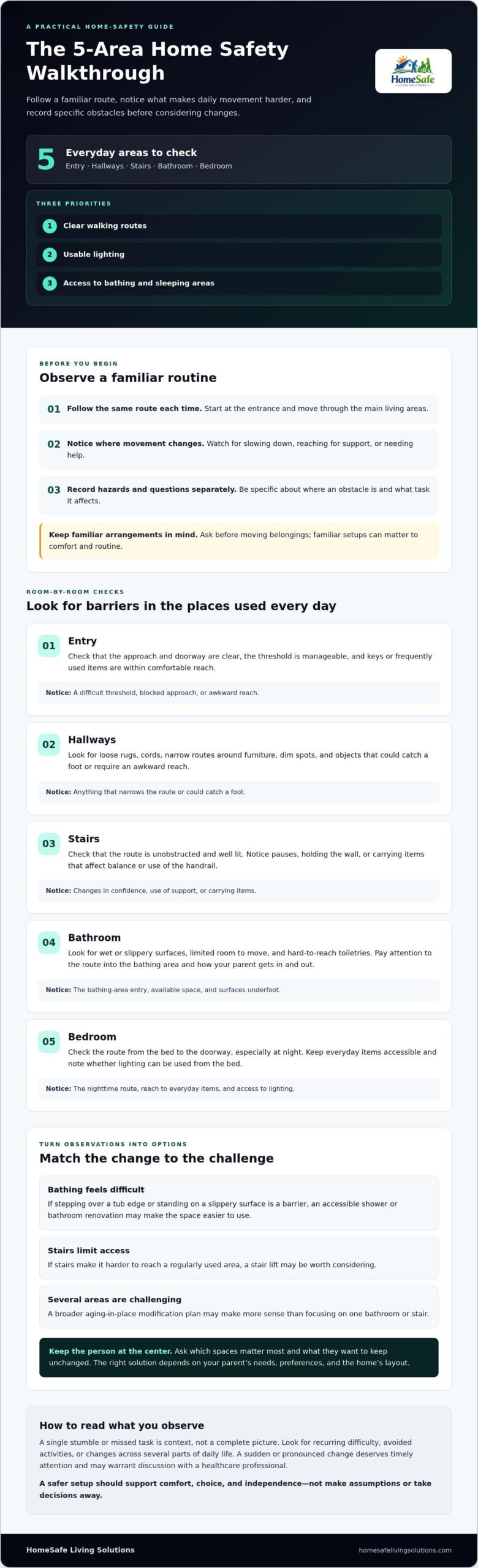
A home walkthrough can turn a general concern into a prioritized list. Follow the same route each time, from the entrance through the main living areas. Notice where your parent slows down, reaches for support, or needs help. Ask before moving belongings, since familiar arrangements can be important to their comfort and routine.
A simple room-by-room home safety walkthrough
Observe a familiar routine, such as coming home, walking to the bedroom, or getting ready for bed. For each task, note what makes it easier or harder, then record hazards and questions separately. Be specific: write down where a rug shifts, which doorway feels difficult to navigate, or what your parent has to reach for. These observations help clarify the problem; individualized recommendations should also account for your parent’s needs and the home’s layout.
- Entry: Check that the approach and doorway are clear, the threshold is manageable, and keys or frequently used items are within comfortable reach.
- Hallways: Look for loose rugs, cords, narrow routes around furniture, dim spots, and objects that could catch a foot or require an awkward reach.
- Stairs: Check that the route is unobstructed and well lit. Notice whether your parent pauses, holds the wall, or carries items that affect their balance or use of the handrail.
- Bathroom: Look for wet or slippery surfaces, limited room to move, and toiletries that are difficult to reach. Pay attention to the route into the bathing area and how your parent gets in and out.
- Bedroom: Check the route from the bed to the doorway, especially at night. Keep everyday items accessible and note whether your parent can use the lighting from the bed.
Prioritize clear walking routes, usable lighting, and access to bathing and sleeping areas. A change that works for one person may not suit another or prevent falls, so focus on your parent’s abilities and routines. For help planning tailored aging-in-place home modifications, consider which improvements could make daily tasks more manageable while preserving comfort and independence.
How tailored home modifications can support safer aging in place
A change in mobility doesn’t automatically call for a major remodel. The right response depends on which everyday tasks have become difficult, how your parent wants to use the space, and what the home can accommodate. A tailored plan can address a specific barrier while supporting comfort, independence, and the familiar feel of home.
Match the modification to the challenge and your parent’s priorities
Start with the task causing concern. If stepping over a tub edge or standing on a slippery surface makes bathing difficult, a wheelchair-accessible shower or bathroom renovation may make the space easier to use. If stairs limit access to a bedroom or another regularly used area, a stair lift may be worth considering. If your parent has difficulty moving through several parts of the home, a broader aging-in-place modification plan may make more sense than focusing on a single bathroom or stair. The right solution depends on the person and the home’s layout.
Ask your parent which spaces matter most and what they want to keep unchanged. Thoughtful design can balance easier movement and everyday comfort with the character of a home, so accessibility improvements feel considered rather than clinical. That’s a practical part of how to keep aging parents at home safely: match the changes to real needs, not assumptions.
HomeSafe Living Solutions is owned and operated by Mate Skoro, a Certified Aging-in-Place Specialist (CAPS), and provides accessibility remodeling and stair lift installations in Clackamas, Wilsonville, West Linn, Oregon City, and Tualatin. HomeSafe Living Solutions can help families in these communities explore modifications suited to their parent and home, with safety and familiar comfort in mind.
Take the Next Step Toward a More Comfortable Home
Planning for changing needs doesn’t mean making every decision at once. Start with your parent’s priorities, then consider which changes could make it easier to carry out the routines that matter. A thoughtful plan can evolve over time, keeping their voice at the center.
If you’re considering how to keep aging parents at home safely, a conversation about the home’s possibilities can help turn uncertainty into a manageable next step. HomeSafe Living Solutions provides ADA remodeling, accessible bathroom renovations, and stair lift installations to support safer, more accessible living at home.
Contact HomeSafe Living Solutions to discuss an accessibility remodel and take a practical first step toward supporting your parent’s comfort and independence. With a plan shaped around their needs, home can continue to feel like home.
Frequently Asked Questions
Can an aging parent live at home alone safely?
An aging parent may be able to live at home alone if their health, daily abilities, and access to help make it workable. Consider whether they can respond to an emergency, use a phone, and manage important routines, including meals and medications. To plan how to keep aging parents at home safely, review these needs with your parent and revisit the plan when circumstances change.
What should I do if my aging parent falls at home?
Stay calm, check whether they’re hurt, and call emergency services if they’re seriously injured, have hit their head, seem confused, or can’t get up. Don’t try to lift them if you suspect an injury. If there’s no obvious emergency, contact a healthcare professional for guidance, since some injuries may not be immediately clear. Note what happened and where the fall occurred.
Does Medicare pay for home modifications for aging parents?
Medicare generally doesn’t pay for home remodeling simply to make a house more accessible. Coverage depends on the specific benefit and circumstances, and medical equipment is different from structural changes to a home. Before making plans around reimbursement, ask Medicare or your parent’s plan about the specific modification and keep a record of the response. Don’t assume a remodel will be covered.
How can I help an aging parent without taking away their independence?
Offer choices and ask before stepping in. For example, instead of taking over grocery shopping, ask whether your parent would prefer help making a list, getting to the store, or carrying bags. Agree on what support feels welcome, then check in again rather than assuming the arrangement still works. Families in Clackamas, Wilsonville, West Linn, Oregon City, and Tualatin can keep their parent’s preferences central as needs evolve.