

What if you didn’t have to choose between a bathroom that feels like a personal spa and one that keeps you safe? Many homeowners feel stuck, believing that a small footprint can’t handle a wheelchair accessible shower without looking clinical or risking water damage. It’s natural to worry that accessibility modifications might hurt your home’s resale value or feel like a compromise. You want a space that restores your dignity and independence, but you also want it to blend beautifully into your home’s existing style.
We understand that peace of mind begins with a design that feels secure and intentional. You can transform even the most limited space into a barrier-free sanctuary by using expert ADA design principles and the latest “wet room” techniques. In this guide, we’ll share seven creative roll in shower ideas for small bathrooms that prioritize both safety and aesthetics. You’ll discover how precision drainage and tailored craftsmanship allow for a seamless entry that meets local building codes in Portland, Gresham, Damascus, Clackamas, and Sandy while providing the long-term comfort your family deserves. Mate and his team are here to show you that a handicap accessible bathroom can be the most beautiful room in your house.
Key Takeaways
- Learn why a zero-entry threshold is the essential foundation for any wheelchair accessible shower, ensuring safety without compromising on style.
- Explore the “wet room” philosophy to maximize your usable space by waterproofing the entire floor, turning a cramped room into an open sanctuary.
- Discover practical roll in shower ideas for small bathrooms that utilize corner layouts to keep your path of travel clear and unobstructed.
- Find out how to choose decorative grab bars that double as functional accessories, helping you avoid a clinical hospital look in your home.
- Understand how precision drainage engineering prevents water damage, protecting your home’s integrity while providing the independence you need.
The Foundation of Small-Space Roll-In Design
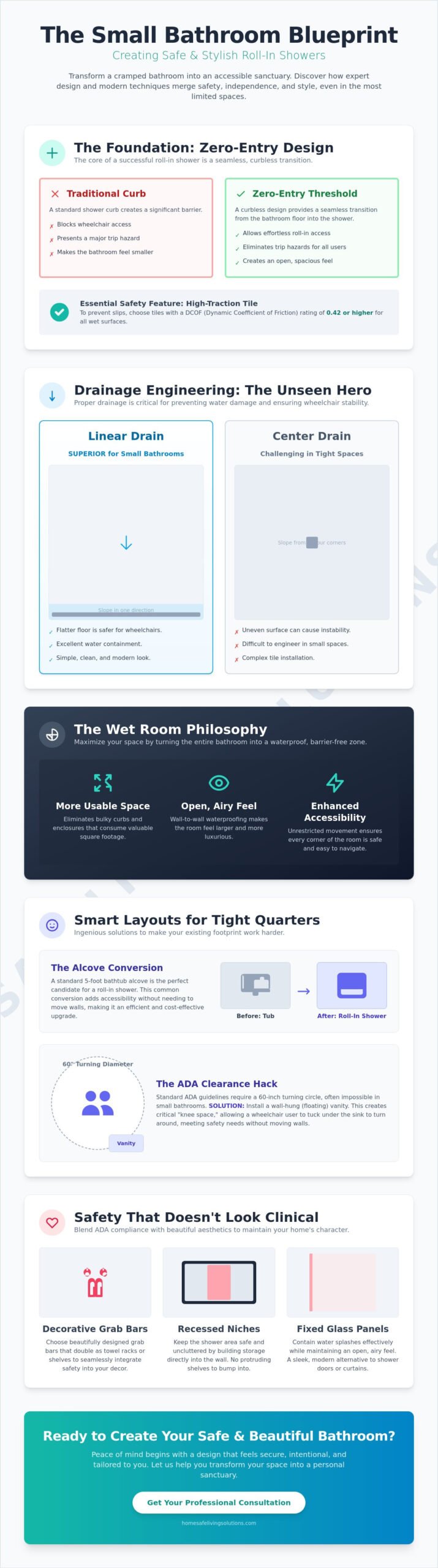
A true roll-in shower is more than just a walk-in stall. It requires a zero-entry threshold, meaning there’s no curb to trip over or block a wheelchair. For many families, this is the core of a successful wet room design. In a small bathroom, every inch matters. You aren’t just removing a barrier; you’re creating a seamless transition that restores independence. Peace of mind begins here, at the floor level, where precision meets daily comfort.
When you’re working with a 3×3 or 3×5 space, managing water is the biggest hurdle. Without a curb, water wants to wander. We solve this through precision engineering. Your subfloor must be lowered or modified to allow the shower floor to sit flush with the rest of the room. This structural work is why professional handicap bathroom remodel services are essential. You also need tiles with a high Dynamic Coefficient of Friction (DCOF) rating, typically 0.42 or higher, to prevent slips on wet surfaces. Choosing the right materials ensures your home remains a safe sanctuary.
Drainage Engineering: Linear vs. Center Drains
Center drains require the floor to slope from all four corners, which is difficult to manage in tight quarters. Linear drains are superior for roll in shower ideas for small bathrooms. By placing a trench drain along the back wall or at the shower entry, we only need to slope the floor in one direction. This keeps the floor flatter for wheelchair stability. It also effectively stops water from migrating toward your vanity or doorway, protecting your home from moisture damage.
ADA Clearance Basics for Tight Quarters
Standard ADA guidelines suggest a 60-inch turning diameter for wheelchairs. In a small Portland home, that’s often impossible to achieve without moving walls. We bridge this gap by utilizing knee space. By installing a wall-hung vanity, we create room for a wheelchair to tuck underneath. This clever use of space ensures your remodel meets safety needs without requiring a massive addition. It’s about making your home safer through smart, tailored design that fits your existing footprint.
Creative Layouts: Turning Small Bathrooms into Wet Rooms
Small bathrooms often feel like a puzzle with no solution. When you adopt a wet room philosophy, you stop fighting the layout and start using it. By waterproofing the entire floor, you eliminate the need for bulky curbs or enclosures that eat up square footage. This approach is one of the most effective roll in shower ideas for small bathrooms because it turns the whole room into a functional, barrier-free zone. It’s about creating a personal sanctuary where movement is unrestricted and dignity is preserved.
If your bathroom currently has a standard 5-foot tub, you’re in luck. This alcove is the perfect candidate for a handicap bathroom remodel. By removing the tub, you gain enough space to meet ADA-compliant shower guidelines without moving a single wall. Instead of a door that swings out and hits the toilet, consider a fixed glass panel. It keeps the water contained while maintaining an open, airy feel that makes the room look larger. Using a corner roll-in design also helps keep the primary path of travel clear for anyone using mobility aids.
The Open-Concept Wet Room
Wall-to-wall waterproofing is the secret to a successful wet room. This technique allows us to remove the physical boundaries of the shower stall entirely. We often recommend integrating wall-hung toilets and floating vanities. These fixtures increase floor visibility, making the room feel more spacious. They also provide essential clearance for wheelchair footrests, ensuring every corner of the room is accessible and safe. It’s a professional way to blend utility with modern style.
The Alcove Conversion
Converting a tub alcove into a curbless shower is a logical, efficient process. First, we remove the existing tub and adjust the floor height to create a flush entry. Then, we install high-quality waterproofing membranes to protect your home. To keep the interior space clear, we use recessed niches for soap and shampoo. This prevents protruding shelves from becoming a hazard or a barrier in tight quarters. Peace of mind begins here, with a design that works for you, not against you.
Safety Meets Style: Blending ADA Compliance with Aesthetics
Many homeowners fear that a handicap bathroom remodel will turn their personal sanctuary into a cold, clinical space. We believe safety shouldn’t come at the cost of your home’s character. By focusing on “blended” design, we help you maintain your dignity while ensuring total security. These roll in shower ideas for small bathrooms focus on high-end aesthetics that happen to be life-saving. Peace of mind begins here, where every fixture feels like a natural part of your beautiful home rather than an afterthought.
Strategic hardware placement is a hallmark of professional craftsmanship. Instead of industrial-looking bars, we use decorative grab bars that double as elegant towel racks or soap dishes. These fixtures support at least 250 pounds while looking like high-end designer pieces. Lighting also plays a vital role in a secure layout. Recessed LED strips along the floor highlight the transition into the shower area. This subtle glow provides a clear visual cue for safety without the harsh glare of traditional overhead lights.
For those who need extra support, a fold-up seat is a perfect addition to a compact footprint. It provides a stable place to rest during a shower but folds flat against the wall when it isn’t needed. This ensures the interior remains clear for wheelchair maneuvers, respecting the tight quarters of a typical Portland home. It’s a tailored solution that balances immediate needs with long-term comfort.
High-End Materials for Accessible Spaces
Using non-porous surfaces like quartz or large-format porcelain tile reduces grout lines, which makes cleaning much easier and prevents mold growth. We also prioritize color contrast to aid navigation. Using a different tile color at the threshold helps those with low vision identify the floor-to-shower transition safely. As suggested in the AARP HomeFit Guide, these visual markers are essential for creating a truly universal design. These smart roll in shower ideas for small bathrooms prove that accessibility can be sophisticated.
Handheld Shower Systems and Controls
A slide-bar handheld showerhead is a non-negotiable feature for a flexible bathroom. It allows both seated and standing users to adjust the water height to their exact preference. We also install thermostatic mixing valves to prevent sudden temperature spikes. These valves protect users with reduced skin sensitivity from accidental scalding, providing another layer of protection for your family. If you’re ready to see how these designs can work in your space, Request a Free Home Assessment for your Portland area home today.
Take the First Step Toward a Safer, More Beautiful Home
You’ve discovered that a limited footprint shouldn’t be a barrier to your independence. By focusing on precision drainage engineering and the open-concept wet room philosophy, you can create a space that feels larger while meeting essential ADA requirements. These roll in shower ideas for small bathrooms prove that safety is sophisticated when you choose high-end materials and blended hardware that honors your home’s character. You don’t have to sacrifice style to gain the security you deserve.
At HomeSafe Living Solutions, we bring specialized expertise in ADA-compliant construction to every project we’ve touched since 2021. As a locally owned business serving the Portland and Eugene areas, we ensure a Certified Aging-in-Place Specialist (CAPS) oversees your remodel to guarantee the highest standards of safety and comfort. We’re here to transform a stressful home modification into a manageable, empowering experience for your family. Schedule your Free Home Assessment with Mate and the team today. Peace of mind begins here, and we’re ready to help you protect your home and your independence.
Common Questions About Accessible Bathrooms
Is a roll-in shower possible in a very small 5×7 bathroom?
Yes, it’s absolutely possible to fit a roll-in shower into a 5×7 footprint by utilizing a wet room layout. This design removes traditional stall boundaries and allows the entire bathroom floor to act as a single, waterproofed surface. By installing wall-hung fixtures and precise drainage, you can maintain the required clearance for wheelchair footrests without needing to expand the room’s physical walls.
How much does it cost to convert a standard tub into a roll-in shower?
The cost of a conversion depends on the complexity of your structural modifications and the materials you select. Factors like lowering the subfloor for a curbless entry or choosing high-end slip-resistant tiles will influence the final investment. We recommend checking with local professionals for a tailored assessment to understand the specific requirements of your home’s plumbing and foundation before starting your project.
Do roll-in showers cause water damage to the rest of the bathroom?
Professional installation prevents water damage through precision drainage engineering and advanced waterproofing membranes. When exploring roll in shower ideas for small bathrooms, it’s vital to use a linear drain and a correctly pitched floor to guide water away from the rest of the room. These systems ensure that moisture stays contained in the shower zone, protecting your home’s structural integrity and providing long-term peace of mind.
What is the difference between a walk-in shower and a roll-in shower?
The primary difference lies in the threshold entry. A walk-in shower often features a low curb that a user must step over, while a true roll-in shower has a zero-entry threshold for seamless wheelchair access. Roll-in designs are specifically engineered to meet ADA standards, ensuring there are no physical barriers to impede movement or compromise safety for those with limited mobility or those using mobility aids.