

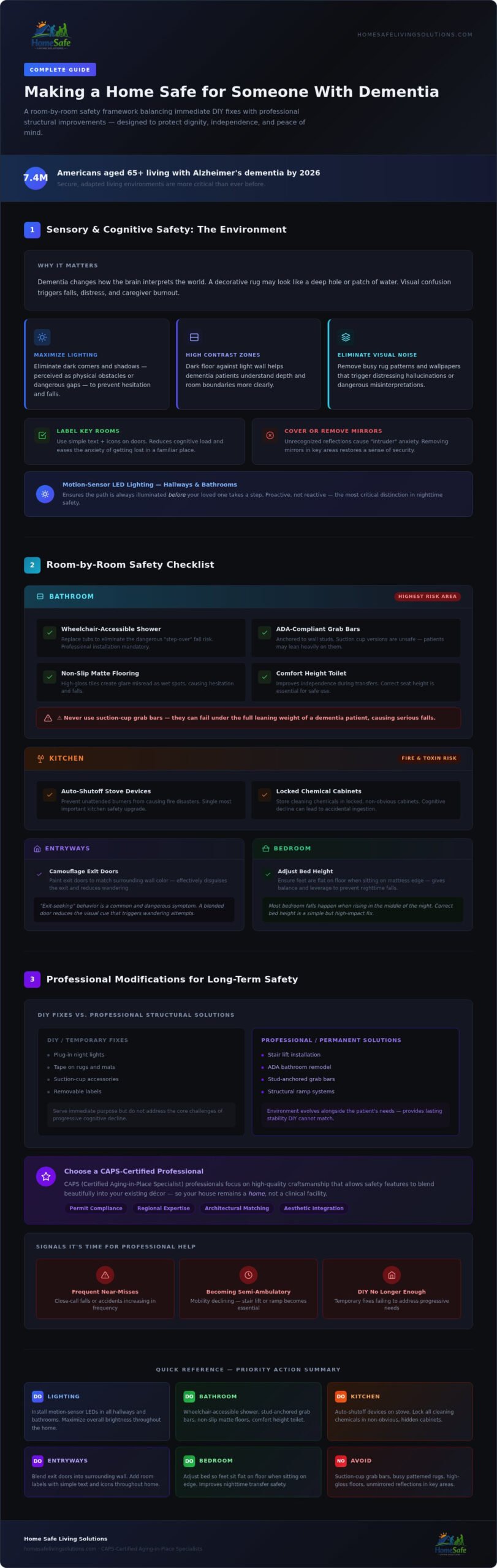
By 2026, an estimated 7.4 million Americans aged 65 and older are living with Alzheimer’s dementia, making secure living environments more critical than ever. If you’re caring for a loved one, you likely understand the quiet anxiety that comes with every floorboard creak at night or the constant worry over a potential fall in the bathroom. It’s natural to feel overwhelmed when making a home safe for someone with dementia while trying to preserve the character of the place they love.
Peace of mind begins here with a clear plan. In this guide, you’ll discover a room-by-room checklist that balances immediate DIY fixes with professional structural improvements. We’ll show you how to reduce confusion and prevent wandering through tailored modifications that blend seamlessly into your décor. You’ll learn how to create a protective sanctuary that supports both safety and independence for your family.
Key Takeaways
- Learn how to eliminate “visual noise” and maximize lighting to reduce sensory confusion and improve cognitive clarity for your loved one.
- Identify high-impact changes for the bathroom and kitchen, including auto-shutoff devices and wheelchair-accessible shower conversions.
- Get a comprehensive roadmap for making a home safe for someone with dementia by balancing immediate DIY adjustments with permanent structural safety.
- Discover how professional aging-in-place modifications can restore dignity and independence while blending beautifully into your existing home design.
Optimizing the Home Environment: Sensory and Cognitive Safety
Dementia changes how the brain interprets the world around it. What looks like a decorative rug to you might appear as a deep hole or a patch of water to someone with cognitive decline. This sensory confusion is a major factor when making a home safe for someone with dementia. To reduce these risks, start by eliminating “visual noise.” Remove busy patterns from rugs and wallpapers, as these intricate designs can trigger distressing hallucinations or misinterpretations of the environment.
Lighting is your most powerful ally in maintaining safety. Maximize brightness throughout the house to eliminate dark corners. Shadows are often perceived as physical obstacles or dangerous gaps, leading to hesitation and falls. You should also create high-contrast zones between floors and walls. A dark floor against a light wall helps a person with dementia understand depth and room boundaries more clearly. By making a home safe for someone with dementia through these sensory adjustments, you reduce the daily friction that leads to caregiver burnout. For daily navigation, label essential rooms with simple text and icons. This reduces cognitive load and eases the anxiety of getting lost in a familiar place.
Improving Visibility and Reducing Confusion
Hallway and bathroom safety depends on lighting being proactive rather than reactive. Install motion-sensor LED lighting in hallways and bathrooms to assist with nighttime movement. This ensures that a path is always illuminated before your loved one takes a step. Additionally, pay close attention to mirrors. If your loved one no longer recognizes their own reflection, it can cause “intruder” anxiety. Covering or removing mirrors in key areas restores a sense of security. Peace of mind begins here, where small, thoughtful changes protect the sanctuary of your home.
Room-by-Room Safety Checklist: Bathroom, Kitchen, and Entryways
Making a home safe for someone with dementia requires a proactive look at the high-traffic areas where accidents frequently occur. In the kitchen, the primary goal is fire prevention and toxin control. Install auto-shutoff devices on stoves to prevent unattended burners from causing disaster. It’s also vital to store cleaning chemicals in locked, non-obvious cabinets. Cognitive decline can sometimes lead to the accidental ingestion of hazardous fluids, so keeping these items out of sight is a simple but life-saving step.
For entryways, managing “exit-seeking” behavior is a common challenge. You can reduce wandering by painting exit doors to match the surrounding wall color, which effectively disguises the exit. In the bedroom, prioritize stability by adjusting the bed height. Ensure that when your loved one sits on the edge of the mattress, their feet are flat on the floor. This provides the necessary leverage and balance to prevent falls when they rise in the middle of the night.
Preventing Falls and Accidents in the Bathroom
The bathroom is often the most hazardous room in the house. A handicap-accessible bathroom remodel is the gold standard for making a home safe for someone with dementia. Replacing standard tubs with wheelchair-accessible showers eliminates the dangerous “step-over” fall risk. Professional installation is mandatory for security. You must use ADA-compliant grab bars securely anchored to wall studs; suction cup versions aren’t safe for dementia patients who may lean heavily on them. To further reduce risks, choose non-slip, matte-finish flooring. High-gloss tiles create glare that can be misinterpreted as wet spots, causing hesitation. Finally, ensure the toilet is at a “comfort height” to improve independence during transfers. If you’re feeling overwhelmed, a Free Home Assessment is an excellent way to prioritize these essential changes.
Professional Modifications for Long-Term Peace of Mind
While small adjustments provide immediate relief, making a home safe for someone with dementia often requires a shift toward permanent structural solutions. Temporary fixes like tape or plug-in lights serve a purpose, but they don’t address the core challenges of progressive cognitive decline. If your loved one is becoming semi-ambulatory, a professional stair lift installation can safely reopen the upper levels of their home. These aging-in-place modifications ensure the environment evolves alongside their needs, providing stability that DIY efforts cannot match.
Choosing a CAPS-certified professional is essential for this transition. Mate and his team focus on high-quality craftsmanship that allows safety features to blend beautifully into your existing décor. This tailored approach ensures that your house remains a home rather than a clinical facility. Local expertise in the Clackamas and Eugene area is particularly valuable for navigating regional permit compliance and matching the unique architectural styles found in Oregon City or West Linn. Peace of mind begins here, with solutions built to last.
When to Transition to Professional ADA Remodeling
Identifying the right time for professional help is crucial when making a home safe for someone with dementia. If you notice frequent near-misses or if your loved one is struggling with basic tasks despite DIY changes, it’s time for a more robust plan. A handicap kitchen remodel, for example, restores dignity by allowing safe participation in family traditions like meal prep. To get started, you can schedule a Free Home Assessment with Mate and his team to identify hidden risks in Clackamas or Wilsonville homes.
Protecting Your Loved One’s Future Today
Transforming your living space is a profound journey of love and security. By optimizing sensory clarity and addressing room-specific hazards, you remove the daily obstacles that cause distress. Whether you are fixing immediate risks or planning for long-term stability with professional modifications, making a home safe for someone with dementia is the most meaningful gift you can offer. Since 2021, HomeSafe Living Solutions has helped families in Clackamas, Wilsonville, and Eugene restore independence through expert craftsmanship. As a Certified Aging-in-Place Specialist (CAPS), Mate and his team ensure every modification blends beautifully into your home’s character. Peace of mind begins here with a plan tailored to your family’s needs. Schedule Your Free Home Safety Assessment with HomeSafe Living Solutions today. You don’t have to navigate these changes alone; a safer sanctuary is within reach.
Frequently Asked Questions
What is the most dangerous room in the house for someone with dementia?
The bathroom is widely considered the most dangerous room due to the combination of water, hard surfaces, and slippery floors. Falls in this area often result in serious injury. When making a home safe for someone with dementia, prioritizing a bathroom renovation is the most effective way to reduce emergency risks and ensure long-term stability for your loved one.
How can I stop someone with dementia from wandering out of the house?
You can reduce exit-seeking behavior by disguising doors to match the surrounding wall color or covering handles with cloth. Installing motion sensors or high-mounted deadbolts out of the line of sight also helps. These changes provide security without creating a clinical environment, ensuring that your house remains a comforting sanctuary while preventing dangerous nighttime wandering into the neighborhood.
Are grab bars enough, or do I need a full bathroom remodel?
While grab bars provide essential support, they don’t address the high threshold of a standard bathtub. Making a home safe for someone with dementia often requires a transition to a curbless, walk-in shower to eliminate trip hazards entirely. A full remodel allows for matte-finish floors and comfort-height toilets, offering a level of security and dignity that simple hardware additions simply cannot match.
Does insurance cover home modifications for dementia safety in Oregon?
Medicare typically doesn’t cover structural home modifications, though some Medicare Advantage plans might offer limited support. In Oregon, families should explore Medicaid waivers like the K Plan, which can sometimes provide funding for aging-in-place improvements. Long-term care insurance policies also frequently include benefits for these essential safety upgrades. It’s best to consult with an Oregon-based specialist to identify your specific regional options.