

What if a turn or landing could still be part of a safe route upstairs? A curved stair lift installation is planned around the staircase, rather than fitted from a one-size-fits-all template. If you’re concerned about tight corners, disruption, or preserving your home’s familiar layout, careful planning can help address those priorities. The rail is shaped to follow the staircase, and the plan considers how the rider will get on and off at each end.
The first step is to understand both the staircase and the person who’ll use the lift. This guide explains why curved lifts need staircase-specific planning, what to expect during an in-home assessment and installation, and how to prepare for a useful conversation about fit. HomeSafe Living Solutions provides stair lift installation for local homeowners, with owner Mate Skoro, a Certified Aging-in-Place Specialist, bringing an aging-in-place perspective to the process.
Key Takeaways
- Turns, landings, stair width, and the rider’s needs all affect whether a curved lift may suit a staircase.
- Curved stair lift installation follows a tailored process, from discussing mobility needs through planning, fitting, and testing.
- Project timing depends on the staircase and the planning required, so each installation follows its own path.
- HomeSafe provides stair lift installation in Clackamas, Wilsonville, West Linn, Oregon City, and Tualatin.
Can a Curved Stair Lift Be Installed? Understand the Custom-Fit Requirements
A staircase with turns or landings can often be considered for a lift, but there is no universal fit. A successful curved stair lift installation depends on the staircase layout and the person who’ll use it. The whole route matters: turns, intermediate landings, and narrow sections can affect where the rail runs and how the rider gets on and off comfortably.
A custom rail follows the measured route of a particular staircase, including its turns and landings. Unlike a straight rail, it is planned around the staircase’s individual path. For a general overview of stairlift types and how they work, see Stairlift.
What staircase details affect a curved stair lift assessment?
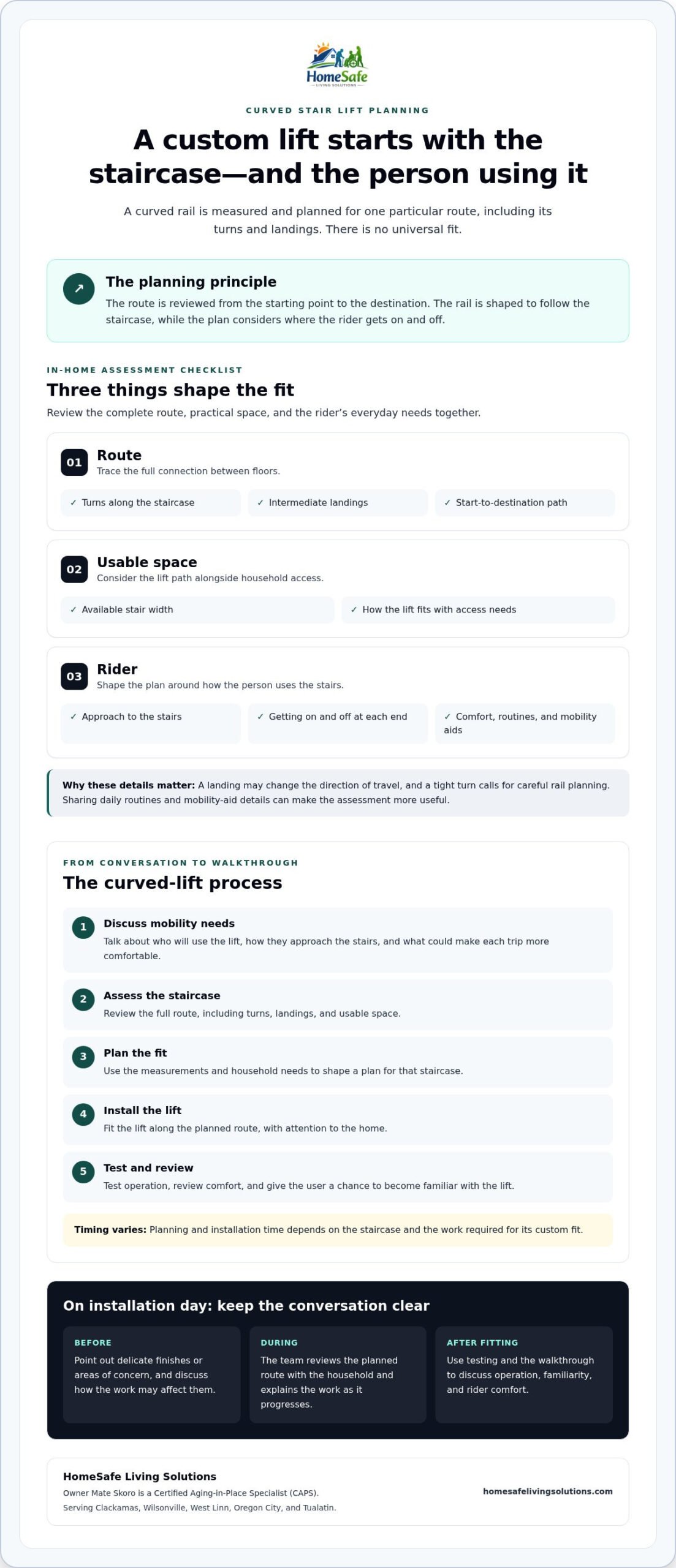
The assessment considers more than one measurement. It reviews the route from the starting point to the destination, including each turn and landing, to understand how the staircase connects the floors. Usable stair space matters too: the plan needs to account for the lift’s path as well as practical access for the household.
The rider’s needs help shape the plan. Consider how the person approaches the stairs, where they need to get on and off, and what would make regular trips more comfortable. A landing may change the direction of travel, for example, while a tight turn calls for careful rail planning. Sharing details about daily routines and mobility aids can make the assessment more useful.
- Route: turns, landings, and the complete path between floors.
- Space: usable stair width and how the lift fits with the household’s access needs.
- Rider: comfort and practical movement at the start, along the route, and at the destination.
HomeSafe’s in-home assessment brings these details together in a plan for the staircase and household. Before installation begins, you can discuss how the proposed route addresses the turns, landings, and access points in your home.
How Curved Stair Lift Installation Works: From Home Assessment to Testing
A curved project moves through planning and installation steps, with each one helping ensure the setup suits the household. Careful measurement matters because the rail needs to follow the staircase’s turns and landings. Since every route is different, the time needed for planning and installation depends on the staircase and the work required for its custom fit.
- Discuss mobility needs. Talk about who will use the lift, how they approach the stairs, and what would make each trip more comfortable.
- Assess the staircase. Review the full route, including turns, landings, and usable space.
- Plan the fit. Use the measurements and household needs to shape an installation plan for the staircase.
- Install the lift. Fit the lift along the planned route, with attention to the home.
- Test and review. Test the lift and give the user an opportunity to become familiar with its operation and consider comfort.
What should homeowners expect on installation day?
The team reviews the planned route with the household and explains the work as it progresses. Before installation, point out any delicate finishes or areas you’re concerned about, and discuss how the work may affect them. Once the lift is fitted, testing provides an opportunity to review its operation and the rider’s comfort. If anything feels unfamiliar, raise it during the walkthrough so it can be discussed.
HomeSafe Living Solutions provides tailored planning and stair lift installation, helping make the process more manageable as your home adapts to changing mobility needs. Learn more about stair lift installation.
Plan Curved Stair Lift Installation with HomeSafe in the Portland-Area Communities
A curved stair lift project should account for both the home’s layout and the resident’s everyday mobility needs. HomeSafe Living Solutions provides stair lift installation and aging-in-place modifications tailored to the household, helping make accessibility improvements practical for daily routines. The team serves homeowners in Clackamas, Wilsonville, West Linn, Oregon City, and Tualatin.
What happens during a HomeSafe home assessment?
The assessment is a chance to discuss the resident’s mobility goals and how the staircase connects with the rest of the home. Consider the route between floors, how the resident approaches and uses the stairs, and what comfort and independence mean in everyday routines. These details help shape a plan around the person and the home, rather than treating curved stair lift installation as a standard fitting.
Owner Mate Skoro is a Certified Aging-in-Place Specialist (CAPS). This aging-in-place perspective considers how a home can better serve someone as mobility changes. It informs the planning conversation alongside a home-specific review of the staircase and household.
An assessment can clarify the next steps and how the project may fit into your home and routine. If you’re in Clackamas, Wilsonville, West Linn, Oregon City, or Tualatin, arrange a Free Home Assessment to discuss your goals and a tailored plan. Thoughtful planning can support comfort and independence while helping you feel more at ease about moving between floors. Peace of mind begins here.
Take the Next Step Toward Easier Movement at Home
A stair lift can help make everyday trips upstairs more manageable as mobility needs change, while keeping familiar spaces within reach. The right curved stair lift installation begins with a conversation about what comfort, confidence, and independence look like for the person who’ll use it.
HomeSafe Living Solutions brings an aging-in-place perspective to accessibility projects, led by Mate Skoro, a Certified Aging-in-Place Specialist (CAPS). A home assessment offers a practical way to discuss your goals and consider a plan shaped around your household.
Start with a conversation about your staircase and mobility needs. Schedule your Free Home Assessment with HomeSafe Living Solutions and explore an approach that supports safer, more comfortable movement at home. A more accessible routine can begin with one thoughtful conversation.
Frequently Asked Questions
Can a stair lift be installed on any curved staircase?
No, a curved stair lift isn’t suitable for every staircase or every rider. The assessment considers the complete route, available space, and how the person will use the lift. A doorway near the stairs or the space needed to get on and off may affect the plan. A tailored review helps establish what may work in your home.
How long does curved stair lift installation take?
There isn’t one schedule for every curved stair lift installation. The time required depends on the staircase, the planning involved, and the work needed to fit the lift to the home. A route with multiple turns or landings may call for more planning than a simpler one. During planning, homeowners can discuss the expected sequence and timing for their project.
Will installing a curved stair lift damage my stairs or walls?
Installation can involve attaching lift components to the staircase, so it’s sensible to discuss how the work may affect your home before it begins. The approach depends on the project and the surfaces involved. Point out delicate finishes or areas you’re concerned about during the assessment, and ask for the planned work to be explained clearly.
What should I prepare before a curved stair lift assessment?
Before the visit, think about the rider’s daily routine and any difficulties they experience on the stairs. Note where they start and finish their trips, whether they use a mobility aid, and what might make getting on and off more comfortable. Clear loose items from the stairway and nearby landing so the route and surrounding space can be reviewed.