

Can a kitchen designed for wheelchair accessibility actually look like a high-end designer space rather than a sterile hospital ward? Most Oregon families worry that making their home safer means losing the character they love. It’s a common fear, especially when you’re trying to navigate the complex world of ADA standards and rising construction prices. You want a home that protects your independence, not one that feels like a clinical facility.
In this guide, we’ll demystify the handicap kitchen remodel cost Oregon residents should expect in 2026. We’ll show you how to prioritize your budget for long-term comfort while ensuring every modification blends beautifully into your existing home. From understanding local permit fees to choosing hardware that offers both strength and style, you’ll gain the clarity needed to start your project with total peace of mind. Your journey toward a safer, more accessible home begins with these practical insights.
Key Takeaways
- Identify the specific “accessibility premium” factors, such as plumbing relocation and specialized hardware, that drive Oregon project totals.
- Explore the three distinct budgeting tiers for a handicap kitchen remodel cost Oregon homeowners should plan for, from minor modifications to full universal design.
- Learn how working with a Certified Aging-in-Place Specialist (CAPS) protects your investment by avoiding common compliance errors and preserving your home’s aesthetic.
- See how strategic accessibility upgrades serve as a financial safeguard, helping you maintain independence and avoid the recurring expenses of external care facilities.
Understanding the Primary Cost Drivers for Oregon Handicap Kitchens
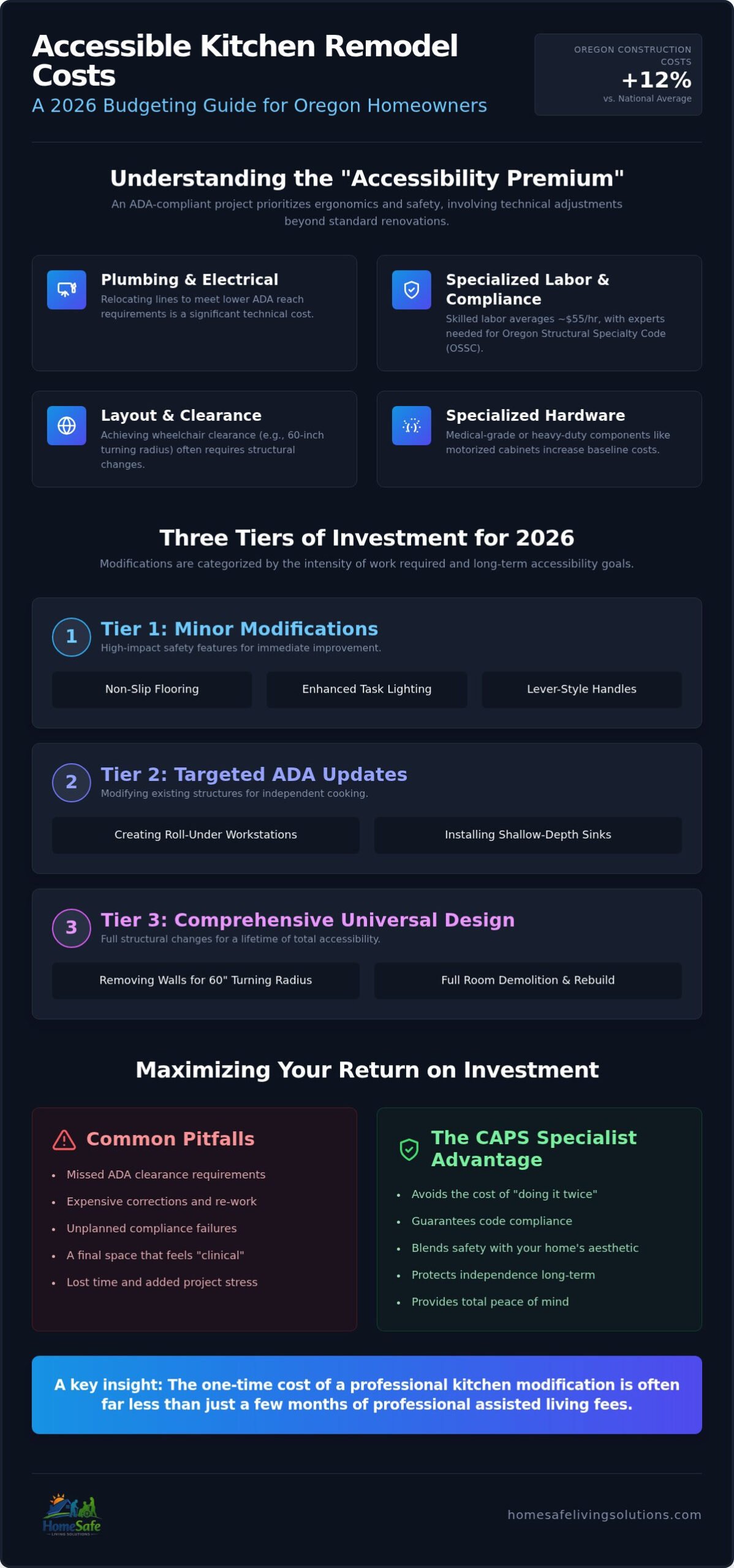
Planning for a handicap kitchen remodel cost Oregon residents see requires looking beyond simple aesthetics. While a standard renovation focuses on updated finishes, an ADA-compliant project prioritizes ergonomics and safety. This “accessibility premium” stems from the need to relocate plumbing and electrical lines to meet lower reach requirements. Oregon’s construction costs are roughly 12% higher than the national average, making these technical adjustments a significant part of your investment. You aren’t just paying for new materials; you’re paying for a layout that honors your independence.
Labor also plays a major role in your budget. With skilled labor rates in Oregon averaging $55 per hour in 2026, the precision required for ADA compliance adds up. Every inch matters when designing for wheelchair clearance. Following Universal Design Principles ensures the space works for everyone, but it requires contractors who understand specific Oregon Structural Specialty Code (OSSC) requirements. These specialists ensure your kitchen is safe without feeling institutional.
Specialized ADA Hardware and Custom Cabinetry
The hardware used in an accessible kitchen is often medical-grade or heavy-duty, which naturally increases the baseline price. These components are designed to bring the kitchen to you. Key investments include:
- Motorized Upper Cabinets: These systems lower shelves to counter height at the touch of a button, eliminating the need for dangerous reaching.
- Roll-Under Workstations: Unlike standard cabinetry, these require specialized framing to provide 30 inches of width and 34 inches of height for wheelchair access.
- Safety Flooring: Slip-resistant materials with a high coefficient of friction are essential to prevent falls, especially in high-moisture areas.
By investing in these tailored solutions, you create a kitchen that feels like a sanctuary. It’s about blending utility with the existing character of your home.
Oregon Budgeting Tiers for Handicap-Accessible Kitchens
Every home in the Pacific Northwest has a unique story, and the handicap kitchen remodel cost Oregon families encounter often reflects the age and layout of their specific property. If you live in a classic Eugene bungalow or a mid-century home in Clackamas, the existing footprint dictates whether you need targeted updates or a structural overhaul. Local permit fees and timelines also vary between municipalities, so early planning is essential for your peace of mind. The final handicap kitchen remodel cost Oregon residents invest depends on which level of modification is required to restore their independence.
Tiered Investment Breakdown for 2026
To help you plan, we categorize modifications into three distinct levels based on the intensity of the work required and the long-term goals for the space.
- Tier 1: Minor Modifications. This entry-level approach focuses on high-impact safety features. It includes installing non-slip flooring, adding task lighting, and replacing traditional knobs with lever handles. These are essential first steps to make your home safer today.
- Tier 2: Targeted ADA Updates. This tier involves modifying existing cabinetry to create roll-under workstations and installing shallow-depth sinks. These changes allow for independent cooking without requiring a full room demolition.
- Tier 3: Comprehensive Universal Design. For those needing full wheelchair clearance, this involves removing structural walls to achieve the required 60-inch turning radius. This level of handicap kitchen remodel ensures the space is fully accessible for a lifetime of comfort.
While Tier 1 addresses immediate safety, Tier 3 provides the total sanctuary many families desire. Structural changes in Oregon typically require detailed site plans and permit approvals, which can take several weeks in busier districts like Eugene. Starting with a professional assessment helps you understand which tier fits your needs and your budget. This clarity helps transform a stressful ordeal into a manageable, rewarding process for your family.
Maximizing ROI: Why Professional ADA Design Saves Money
Investing in a professional design might seem like an added expense, but it’s actually the most effective way to control the total handicap kitchen remodel cost Oregon families face. When you work with a Certified Aging-in-Place Specialist (CAPS) like Mate, you avoid the devastating cost of “doing it twice.” General contractors often miss the precise clearance requirements for wheelchair navigation, leading to expensive corrections later. Beyond compliance, this is a strategic investment in your financial future. The one-time cost of a kitchen modification is often far less than just a few months of professional assisted living fees.
Mate and his team focus on craftsmanship that blends safety features into your home’s existing character. We don’t believe your kitchen should look like a hospital. By using tailored materials that match your home’s aesthetic, we protect your property’s resale value while restoring your dignity. Peace of mind begins here, knowing your home is both beautiful and protective for years to come.
The Value of a Professional Home Assessment
A successful remodel starts with a deep understanding of your home’s bones. A professional assessment identifies hidden structural needs, such as floor reinforcement or electrical rerouting, before any demolition begins. Our local expertise in Oregon City and Tualatin ensures we navigate specific municipal codes quickly, leading to faster permit approvals and fewer delays. This proactive approach keeps your project on track and your budget secure.
Schedule your Free Home Assessment with HomeSafe Living Solutions to take the first step toward a safer, more independent future.
Secure Your Future with a Beautifully Accessible Home
Your home should always be a place of sanctuary and dignity. By understanding the primary drivers of handicap kitchen remodel cost Oregon, you can make informed decisions that protect both your family and your investment. We’ve seen how specialized hardware and professional CAPS-certified design prevent costly compliance errors while ensuring modifications blend seamlessly with your home’s unique character. Whether you live in Eugene, Clackamas, or the surrounding areas, Mate and his team are ready to help you navigate this transition with total confidence. Investing in your safety today is the most effective way to secure long-term independence and peace of mind. Request Your Free Home Accessibility Assessment Today and start your journey toward a safer, more comfortable home. You deserve a kitchen that supports your life every single day.
Frequently Asked Questions
Does insurance or Medicare cover the cost of a handicap kitchen remodel in Oregon?
Medicare typically doesn’t cover the cost of home modifications because they aren’t classified as durable medical equipment. However, some private long-term care insurance policies or specific Medicaid waivers in Oregon may provide financial assistance. It’s best to review your specific policy or consult with a specialist to see if any portions of your project qualify for reimbursement under medical necessity.
How much does it cost to lower kitchen countertops for wheelchair access?
Lowering countertops involves more than just adjusting height. It requires specific structural support to create roll-under access while maintaining a maximum height of 34 inches above the floor. The total expense depends on your choice of materials and whether plumbing for the sink must be relocated. Getting a professional assessment is the best way to determine the specific needs for your unique space.
Are there Oregon tax credits for home accessibility modifications?
While direct state tax credits can vary with new legislation like SB 1576, many homeowners qualify for federal medical expense deductions. If a physician prescribes the modification for medical reasons, you may be able to deduct a portion of the handicap kitchen remodel cost Oregon residents pay. Always consult with a tax professional in Clackamas or Oregon City to verify current incentives.
How long does a typical ADA kitchen renovation take in the Eugene area?
A typical ADA kitchen renovation usually takes between four to eight weeks once construction begins. This timeline accounts for custom cabinetry lead times and the precision required for structural changes in homes across Eugene or Tualatin. Factors such as municipal permit approvals and the complexity of relocating plumbing lines can influence the schedule. We focus on a steady flow to ensure your safety.