
What if the hardest part of protecting your loved ones isn’t the physical stairs, but starting the conversation without triggering defensiveness? Watching your mom or dad hesitate at the bottom step brings a terrifying fear of falls, yet bringing up home modifications often sparks heated arguments and painful feelings of role-reversal. Knowing how to convince parents they need a stair lift doesn’t have to mean stripping away their dignity or control.
You can ensure their safety while fully honoring the independence they cherish. In this guide, you will learn how to shift the conversation away from physical decline and toward empowering them to stay safely in the place they love. We will explore empathetic communication strategies, discreet aging-in-place solutions that blend beautifully into existing home decor, and gentle ways to reach a mutual agreement that brings lasting peace of mind.
Key Takeaways
- Spot subtle physical warning signs and room-avoidance habits early so you can address fall risks before an emergency happens.
- Discover how to convince parents they need a stair lift by using empathetic “I-statements” during calm moments instead of reacting right after a slip.
- Alleviate common household concerns by showing how modern, compact lifts mount directly to stair treads without damaging walls or disrupting hallway decor.
- Leverage a neutral, professional in-home accessibility assessment to remove emotional family friction and protect parental dignity.
Recognizing Mobility Warning Signs and Why Aging Parents Resist Stair Lifts
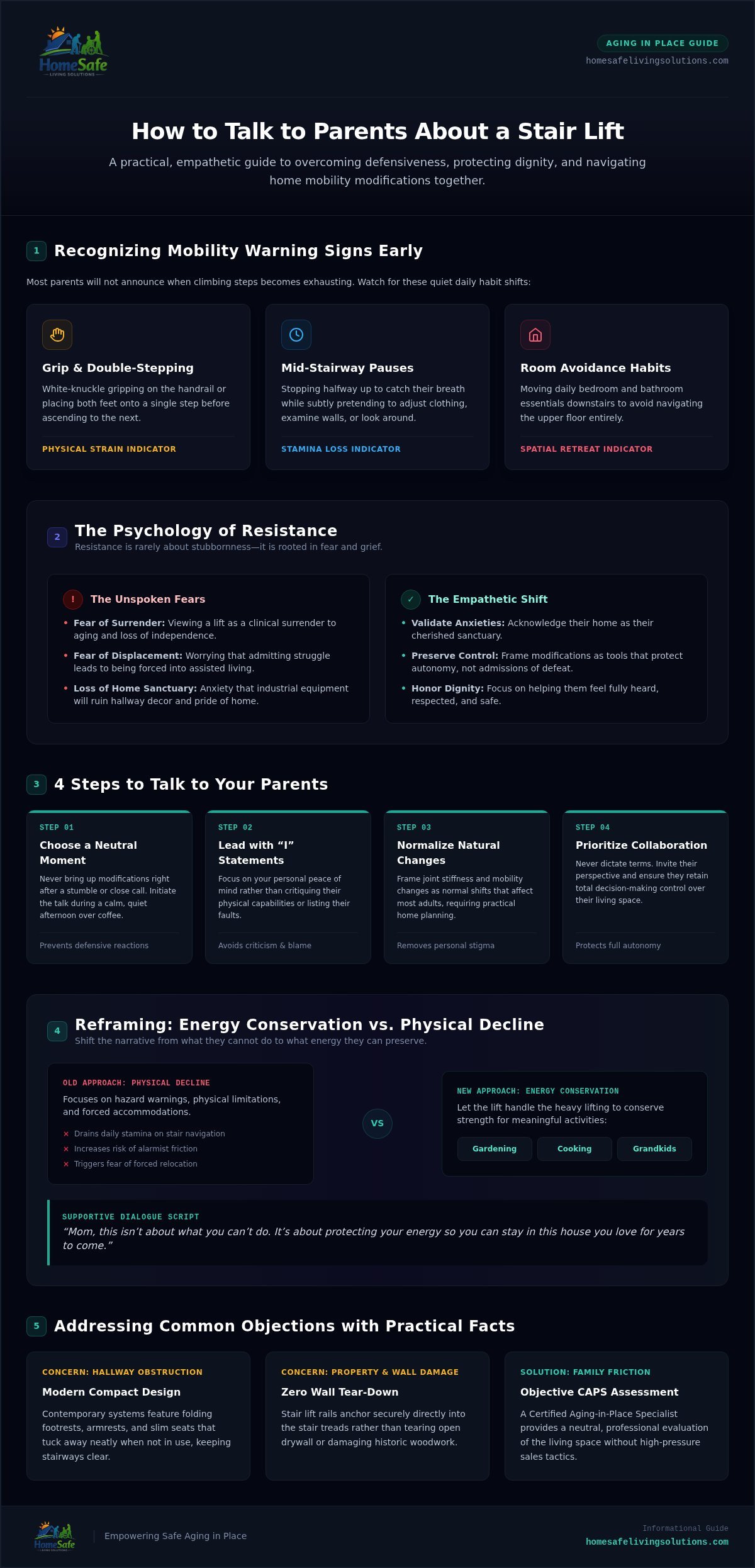
Before you can explore how to convince parents they need a stair lift, you have to spot the early shifts in their daily habits. Most parents won’t announce when climbing steps becomes exhausting. Instead, difficulty reveals itself quietly through subtle behaviors:
- White-knuckle gripping on the handrail or placing both feet on a single step before climbing to the next.
- Pausing halfway up to catch their breath while pretending to adjust clothing or look around.
- Avoidance habits, like moving bedroom essentials downstairs to avoid the second floor entirely.
When adult children notice these signs, alarmist warnings often push parents into immediate resistance. Understanding the emotional weight behind that pushback is the first step toward finding common ground.
The Psychology of Resistance: Fear of Losing Autonomy at Home
Resistance is rarely about stubbornness. It is about grief. For many older adults, installing a stair lift feels like a visible, clinical surrender to aging. Admitting that steps are becoming hazardous brings a deep, unspoken fear: that conceding this struggle will lead to losing their home or being forced into assisted living.
There is also genuine pride in the family home. Many seniors worry that bulky machinery will ruin their hallway decor and make their sanctuary feel like a hospital wing. When learning how to convince parents they need a stair lift, validating these anxieties transforms the discussion. Acknowledge that their home is their sanctuary. Framing accessibility as a tool that protects their autonomy, rather than an admission of defeat, helps them feel heard, respected, and safe.
How to Talk to Your Parents About a Stair Lift: 4 Steps
Approaching this conversation requires patience, tact, and genuine empathy. If you want to know how to convince parents they need a stair lift without causing tension, follow these four practical steps:
- Choose a neutral moment: Never bring up modifications immediately after a stumble or close call. Initiate the discussion during a calm, quiet afternoon over coffee.
- Lead with “I” statements: Focus on your feelings instead of critiquing their physical abilities. Say, “I worry about you slipping, and knowing you can move between floors safely gives me peace of mind.”
- Normalize natural changes: Acknowledge that joint stiffness and common mobility problems affect most adults eventually, and adapting the house is simply practical planning.
- Prioritize collaboration: Never dictate terms. Invite their perspective and ensure they retain total decision-making control over their living space.
Reframing the Lift as an Independence Tool Rather Than Defeat
The key is shifting the focus from physical decline to energy conservation. Climbing stairs drains stamina that could be spent on favorite hobbies. A lift simply handles the heavy lifting, saving strength for gardening, cooking, or playing with grandchildren. Most importantly, mechanical support safeguards their ability to age in place comfortably, whether supported by family or coordinated with elder resources like Earth Angels Home Care.
Try using a supportive script like this: “Mom, this isn’t about what you can’t do. It’s about protecting your energy so you can stay in this house you love for years to come.” Bringing in a trusted specialist for an objective aging in place home modification assessment can also defuse family friction, transforming a stressful debate into an empowering path forward.
Addressing Common Objections with Expert Assessments and Practical Solutions
Parents often resist home modifications because they imagine clunky, industrial machinery blocking their hallway. Modern designs solve this cleanly. Contemporary systems feature folding footrests, armrests, and slim seats that tuck away neatly when not in use, keeping the stairway completely clear for other family members.
Another frequent concern is property damage. Many homeowners worry that installation requires tearing open drywall or damaging historic woodwork. In reality, stair lift rails anchor securely into the stair treads rather than the walls. When working through how to convince parents they need a stair lift, sharing these concrete facts helps dissolve practical hesitations before arguments start.
Scheduling an Objective Home Assessment with a Certified Aging-in-Place Specialist
Even with gentle communication, conversations between adult children and aging parents can feel emotionally charged. Bringing in a qualified third party removes that friction. A Certified Aging-in-Place Specialist (CAPS) provides a calm, neutral evaluation of the living environment without relying on high-pressure sales tactics.
Involving parents directly in an assessment ensures they remain in full control of every decision. They can discuss their daily routines, review tailored options, and choose features that match their personal tastes. Partnering with Mate and the experienced team at HomeSafe Living Solutions provides the compassionate guidance needed to plan thoughtful home adaptations that blend beautifully into existing decor, restoring comfort and delivering genuine peace of mind.
Protect Their Independence and Your Peace of Mind
Learning how to convince parents they need a stair lift isn’t about winning an argument; it’s about protecting their comfort and autonomy in the home they love. By spotting early mobility changes, approaching family conversations with empathy, and highlighting discreet equipment that preserves their decor, you can replace fear with confidence.
You don’t have to take these steps alone. Mate and his team bring trusted local craftsmanship and Certified Aging-in-Place Specialist (CAPS) expertise directly to your home. Every tailored solution is thoughtfully designed to blend seamlessly into your existing living space while removing fall risks. Peace of mind begins here. Schedule a Free Home Accessibility Assessment today to help your parents live safely and comfortably in the place they cherish most.
Frequently Asked Questions
What should I do if my parents refuse to talk about a stair lift?
If your parents shut down the conversation, pause and revisit it later rather than pushing harder. When exploring how to convince parents they need a stair lift, bringing in an objective third party often helps. A Certified Aging-in-Place Specialist serving communities like Oregon City and West Linn can assess the entire home holistically, shifting the focus from physical decline to overall comfort.
Will installing a stair lift damage my parents’ staircase or wall?
No, professional installation will not harm their walls or historic woodwork. The rail system anchors securely into the stair treads using small, discreet brackets, leaving wall surfaces completely untouched. Whether your parents live in a classic home in Clackamas or a newer property in Wilsonville, experienced installers preserve the architectural integrity of the staircase and can safely remove the equipment later.
How do I explain that a stair lift prevents moving to assisted living?
Frame the modification as an investment in staying in their cherished home long-term. Falls on stairs are a leading trigger for unplanned relocations into care facilities. Explain that learning how to convince parents they need a stair lift is about defending their personal autonomy. Mechanical support keeps every level accessible, allowing them to remain independent in neighborhoods like Tualatin for years.
Can a stair lift be folded away when other family members use the stairs?
Yes, modern residential lifts fold up compactly against the side of the stairway. The seat, armrests, and footrest easily fold flat when parked at either landing. This leaves ample clearance for family members and guests to walk up and down normally. Slim rail profiles ensure standard stairways remain open, safe, and easily navigable for everyday household foot traffic.