Did you know that approximately 80% of household falls among older adults occur in the bathroom? It’s a sobering statistic that explains why so many families feel a sense of dread every time a loved one steps onto a wet tile floor. Learning how to prevent falls in the bathroom is about more than just avoiding a trip to the hospital. It’s about reclaiming your sense of security and protecting your dignity in the most private room of your home.
You’ve probably felt overwhelmed by clinical-looking equipment or worried that making your home safer means it will start to look like a medical facility. We agree that your bathroom should remain a personal sanctuary, not a hospital ward. In this guide, you’ll discover how to blend professional safety standards with beautiful design to support your long-term independence. We’ll walk through essential ADA-compliant modifications and expert tips that provide the peace of mind you deserve, all while keeping your home’s character perfectly intact.
Key Takeaways
- Identify the specific “danger zones” where moisture and tight maneuvering spaces create the highest risk for slips and trips.
- Discover how to prevent falls in the bathroom using a “blended safety” philosophy that prioritizes both professional security and home aesthetics.
- Learn why anchoring grab bars directly into wall studs is the only reliable way to ensure they provide the stability you need during a fall.
- Explore how wheelchair accessible showers and curbless designs eliminate the most common tripping points to restore your daily independence.
- Gain clarity on how a tailored handicap bathroom remodel can transform a high-risk area into a secure, peaceful sanctuary.
Understanding Why Bathrooms Are High-Risk Areas for Falls
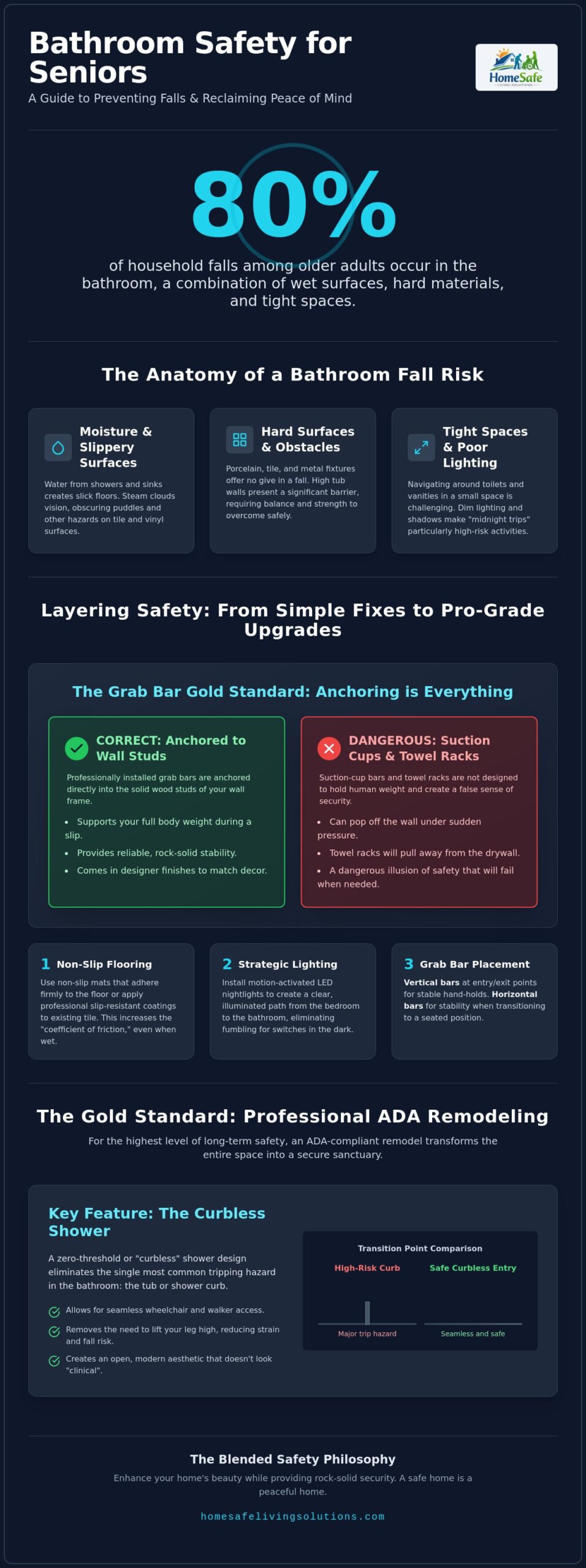
The bathroom is often the most dangerous room in the house, yet it’s also the place where we most value our privacy. Bathrooms are uniquely dangerous because they combine moisture, hard surfaces, and tight maneuvering spaces into a single, high-traffic area. For many seniors, the most significant “danger zones” are the transition over a high tub wall and the slick floor near the vanity. Understanding these risks is the first step in learning how to prevent falls in the bathroom and restoring a sense of security to your daily routine.
Beyond the physical environment, physiological factors play a major role in safety. Thick steam from a hot shower can quickly cloud vision, while poor lighting makes it difficult to judge distances or spot a small puddle. Implementing comprehensive Fall Prevention Strategies isn’t just about avoiding a hip fracture. It’s about achieving the ultimate goal of environmental safety: true peace of mind. When you feel secure in your surroundings, you can focus on your well-being rather than your fear.
The Environmental Hazards You Might Overlook
- Loose bath mats and rugs: These are the #1 trip hazard in Portland homes, often sliding just as you step out of the shower. Beyond using non-slip backing, professional cleaning resources like lakegenevacarpetcleaning.com suggest that keeping these materials free of dirt and oils ensures they don’t develop a slick surface over time.
- Standard tub heights: A traditional 14-inch step is a major barrier for semi-ambulatory residents who may lack the balance to stand on one leg.
- Inadequate lighting: Shadows and dim bulbs make “midnight trips” to the bathroom a high-risk activity.
Common Medical Risk Factors to Consider
Your body’s response to its environment is just as critical as the floor surface. Certain medications for blood pressure can cause orthostatic hypotension, which is a sudden drop in blood pressure that leads to dizziness when standing. If you experience muscle weakness, your ability to react quickly to a minor slip is diminished. When you combine these physical factors with a slippery floor, knowing how to prevent falls in the bathroom becomes a matter of personal honor and safety. Proactively addressing these risks through an Aging in Place Home Modification ensures your home remains a protective sanctuary.
Layering Safety: From Simple Fixes to Essential ADA Upgrades
True safety doesn’t have to look like a hospital ward. At HomeSafe Living Solutions, we believe in a “blended safety” philosophy. This means every modification should enhance your home’s beauty while providing rock-solid security. When considering how to prevent falls in the bathroom, start by looking at your nighttime path. Motion-activated LED lighting can create a soft, guided trail from the bedroom to the toilet. This simple upgrade removes the need to fumble for light switches in the dark, which is a common moment for balance loss.
Choosing the right materials is equally vital. We evaluate the “coefficient of friction” for every surface, ensuring that your tile provides adequate grip even when wet. According to the National Institute on Aging, these environmental changes are crucial for preventing fractures that can permanently alter your lifestyle. If you’re ready to see how these changes fit your space, our Aging in Place Home Modification services are designed to blend utility with your existing decor.
The Critical Role of Properly Installed Grab Bars
The hierarchy of grab bars starts with professional anchoring. Suction-cup alternatives are a dangerous illusion; they can slide or pop off under pressure. We anchor every bar directly into wall studs to ensure they support your full weight. Use vertical bars at entry and exit points for a steady hand-hold, while horizontal bars provide stability when transitioning to a seated position. Many families worry about the “clinical” look, but modern designer grab bars now come in finishes like brushed gold or matte black to match your fixtures. Just remember: never use a towel rack for support. They aren’t built for weight and will likely pull away from the wall during a slip.
Flooring and Surface Safety
Existing tile floors can often be treated with slip-resistant coatings that add invisible texture without changing the look of your room. We recommend specific finishes that offer a high level of traction, especially in the “splash zone” near the vanity. To maintain this effectiveness, professional cleaning by specialists like TOPSERVICE Dienstleistungen can help prevent the buildup of slippery soap scum. By layering these professional-grade solutions, you create a protective environment where peace of mind begins here. These tailored touches ensure your home remains a sanctuary while providing the stability needed for daily independence.
The Gold Standard: Professional ADA Bathroom Remodeling
While simple fixes provide immediate relief, a comprehensive ADA Remodel offers the highest level of protection for your future. This proactive approach focuses on how to prevent falls in the bathroom by fundamentally changing the layout to support your evolving needs. For seniors in Gresham and Clackamas, a handicap-accessible bathroom remodel isn’t just a construction project. It’s a way to restore independence and ensure your home remains your sanctuary for years to come. By planning for semi-ambulatory needs before an emergency occurs, you’re choosing a path of dignity rather than reacting to a crisis.
Working with a Certified Aging-in-Place Specialist (CAPS) ensures that your home modifications are both safe and compliant with current standards. This expertise is vital when making structural changes that require a deep understanding of mobility challenges. According to the National Institute on Aging guide to preventing falls, room-by-room assessments are the best way to catch hidden risks before they lead to an injury. Our team focuses on these details to ensure your home’s character is preserved while its safety is transformed.
Wheelchair-Accessible Showers and Wet Rooms
The most effective way to eliminate tripping hazards is to remove them entirely. A Wheelchair Accessible Shower features a “curbless” entry, meaning there’s no lip or threshold to step over. This design is safer for those using walkers and essential for wheelchair users. In Portland, we ensure these conversions meet local building codes, which require a specific drain slope to keep water where it belongs while maintaining a flat, accessible entry. We also integrate built-in shower seating and handheld showerheads to make seated bathing a comfortable, stress-free experience.
Handicap Accessible Bathroom Layouts
Space management is critical for long-term home viability. We optimize layouts to include a 60-inch diameter turning circle, allowing for easy maneuvering with walkers or wheelchairs. We also install comfort-height toilets, which sit 17 to 19 inches from the floor to reduce strain on knees and hips. Every detail is tailored to provide stability and ease of use. Ready to secure your home? Schedule your Free Home Assessment with HomeSafe Living Solutions today.
Secure Your Independence and Peace of Mind
Your bathroom should be a place where you feel completely at ease, not a source of worry for you or your family. By identifying environmental hazards and layering in professional-grade modifications, you’ve taken the first important steps in learning how to prevent falls in the bathroom. Whether you start with designer grab bars or invest in a full curbless shower conversion, these improvements are about protecting your dignity and your long-term comfort in the home you love.
HomeSafe Living Solutions has specialized in ADA-compliant remodels since 2021. With a Certified Aging-in-Place Specialist (CAPS) on every project, we bring expert craftsmanship to families throughout Portland, Gresham, and the surrounding areas. We treat every home with personal honor and integrity, ensuring that your modifications blend beautifully with your style. Peace of mind begins here, and it starts with a proactive plan for your safety.
Don’t wait for an accident to happen before making your home safer. Get Your Free Peace of Mind Home Assessment today. Let us help you transform your bathroom into a secure, accessible sanctuary that supports your independence for years to come.
Frequently Asked Questions
Are suction-cup grab bars safe for seniors?
Suction-cup grab bars aren’t a reliable safety solution for seniors. While they seem convenient, they rely entirely on a vacuum seal against tile, which can fail without warning due to steam, grout lines, or temperature changes. To truly understand how to prevent falls in the bathroom, you must prioritize bars anchored directly into wall studs. Professional installation ensures the bar can support a person’s full weight during a sudden slip or loss of balance.
What is the best flooring to prevent falls in a bathroom?
The best flooring options feature a high “Dynamic Coefficient of Friction” (DCOF) rating of 0.42 or higher. Small mosaic tiles are excellent because the frequent grout lines provide natural traction for your feet even when the floor is wet. Slip-resistant luxury vinyl plank is another popular choice for local homes. It offers a softer surface than stone or ceramic, which can help reduce the severity of an injury if a fall does occur.
How much does a typical handicap bathroom remodel cost in Portland?
The cost of a handicap bathroom remodel varies significantly based on the scope of the project and the specific needs of your family. Factors like plumbing relocation, structural wall reinforcements for grab bars, and the choice of fixtures all influence the final investment. Because every home is unique, we recommend a personalized assessment to determine the best path forward for your specific layout and long-term safety requirements.
Can I convert my existing bathtub into a walk-in shower?
Yes, converting a bathtub into a walk-in shower is one of the most effective ways to improve home accessibility. This process involves removing the high tub wall, which is a primary tripping point, and replacing it with a low-threshold or curbless entry. This modification makes the space much safer for those with limited mobility. It also allows for the integration of built-in seating and handheld showerheads to make daily bathing a stress-free experience.
What lighting is best for preventing falls at night?
Motion-activated LED lighting is the superior choice for nighttime safety. These sensors detect movement as soon as you enter the room, providing immediate illumination without the need to search for a switch in the dark. It’s best to install path lighting along the baseboards or under the vanity to guide your way. This setup reduces glare and shadows, helping you see obstacles clearly as you learn how to prevent falls in the bathroom.
Does insurance or Medicare cover bathroom safety modifications?
Traditional Medicare typically doesn’t cover the cost of home modifications like grab bars or walk-in showers because they are considered home improvements rather than durable medical equipment. However, some Medicare Advantage plans or long-term care insurance policies may offer partial reimbursement or specific benefits for safety upgrades. It’s always a good idea to check with your specific provider or a tax professional to see if these improvements qualify as a deductible medical expense.