What if the safety features you need to stay in the home you love actually enhanced your bathroom’s style instead of diminishing it? Many homeowners hesitate to begin accessible bathroom renovations because they worry about a clinical, institutional appearance that feels out of place in a private residence. It’s a valid concern, as your home should always feel like a personal sanctuary rather than a medical facility.
We agree that you shouldn’t have to sacrifice elegance for security; you can have a beautiful, barrier-free space that restores your dignity and independence. This guide explores how modern universal design and ADA standards combine to create high-end sanctuaries that provide total peace of mind. We will preview the essential 2026 trends for safe living, including curbless showers and smart fixtures, while detailing how to plan a remodel that respects the unique character of your Portland area home.
Key Takeaways
- Learn how universal design principles transform accessible bathroom renovations from institutional necessities into beautiful, barrier-free sanctuaries for all ages.
- Discover why zero-entry, curbless showers are the gold standard for safety while adding a modern, luxury feel to your master suite.
- Explore how safety features like designer grab bars in matte black or brushed gold can blend seamlessly with your decor without sacrificing security.
- Understand the importance of a home assessment by a Certified Aging-in-Place Specialist (CAPS) to ensure every modification is tailored to your unique needs.
- Compare the strategic investment of a custom home remodel against the long-term costs of assisted living to protect both your savings and your independence.
What Defines Modern Accessible Bathroom Renovations?
At its heart, accessible bathroom renovations represent a commitment to your long-term independence. These modifications remove the physical barriers that turn a daily routine into a source of stress. By focusing on barrier-free design, we help you reclaim your space so you can move with confidence and dignity. It’s about more than just hardware; it’s about making sure your home remains a sanctuary where you feel completely secure.
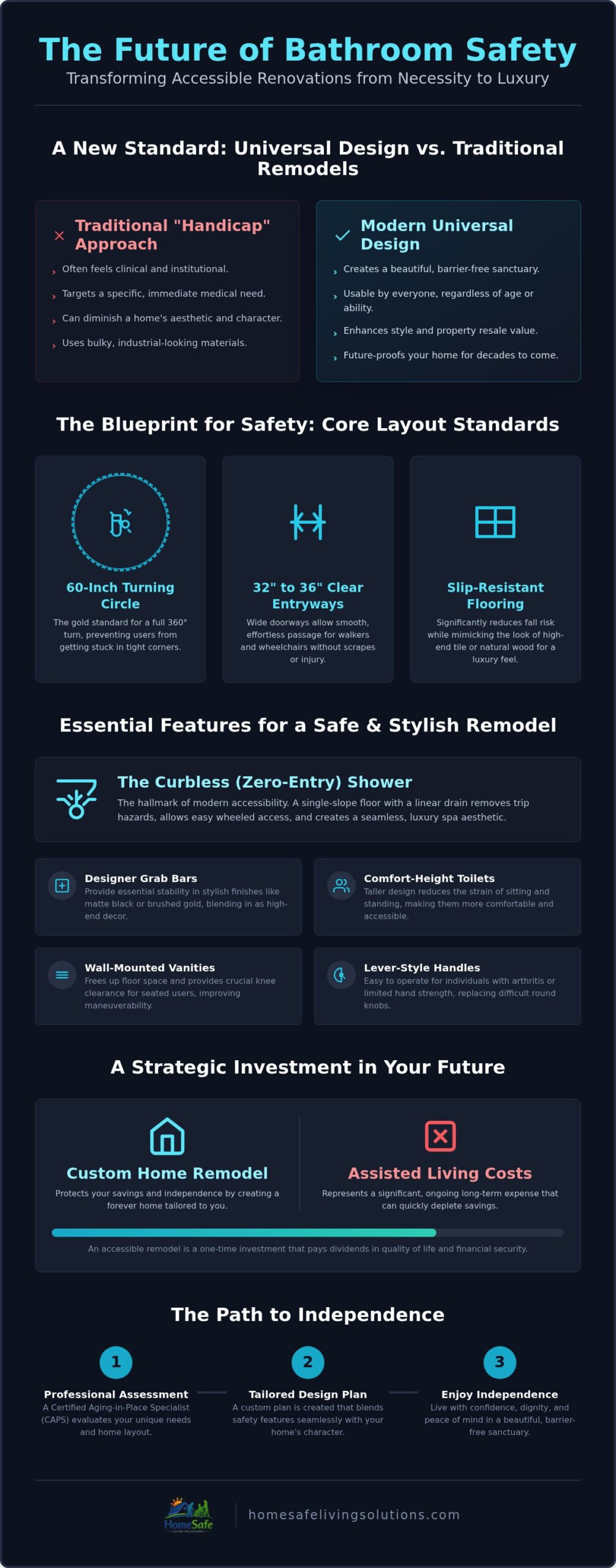
There’s a vital difference between a “handicap accessible” space and “Universal Design.” While a handicap remodel often targets a specific medical diagnosis or immediate physical need, Universal Design creates an environment that’s usable by everyone regardless of age or ability. It’s a thoughtful way to ensure your home remains comfortable for grandchildren, guests, and yourself for decades to come. This approach future-proofs your living space without making it feel clinical.
You don’t have to settle for the cold, institutional look of a hospital or care facility. Today’s “aging-in-place” modifications blend seamlessly into your home’s character. Instead of bulky plastic and industrial metal, we use elegant materials that actually enhance your property’s resale value. ADA-compliant residential remodeling is a specialized construction approach focused on clearance and safety that ensures your bathroom is both functional and beautiful.
The Core Elements of a Barrier-Free Space
Maneuverability is the foundation of a safe layout. A minimum 60-inch diameter turning circle is the gold standard for wheelchair users, allowing for a full 360-degree turn without hitting walls or fixtures. This space is essential for preventing the frustration of getting stuck in tight corners.
Entryways must also be widened to at least 32 inches of clear width, though 36 inches is ideal for most walkers and wheelchairs. This change eliminates the struggle of navigating narrow doorways and prevents painful scrapes or injuries to your hands and arms. It makes the transition from the hallway to the bathroom smooth and effortless.
Flooring must be both beautiful and practical to prevent accidents. We prioritize slip-resistant materials that follow accessible housing standards to significantly reduce the risk of falls. These modern options mimic the look of high-end porcelain tile or natural wood, so you get the luxury style you want with the stability you need for total peace of mind.
Essential Features for a Safe and Functional ADA Remodel
Creating a space that works for everyone requires more than just adding a few bars to the wall. Truly successful accessible bathroom renovations integrate safety features so seamlessly that they feel like luxury design choices rather than medical necessities. We believe that your home should reflect your personal style while providing the structural support you need to move freely. By choosing the right fixtures, you can eliminate the fear of falling and replace it with the confidence of a well-designed sanctuary.
The Curbless Shower: A Safety and Style Staple
The zero-entry or curbless shower is the hallmark of modern accessibility. By using linear drains to create a single-slope floor, we remove the dangerous trip hazard of a traditional tub or shower curb. This allows for effortless wheelchair or walker entry. It’s a high-end look that mimics a luxury spa, proving that safety and sophistication go hand in hand. To ensure your space meets the highest benchmarks for security, we always reference the official ADA bathing room standards during the planning phase.
Inside the shower, versatility is key. We install handheld showerheads on adjustable slide bars, making the space usable whether you are seated on a built-in bench or standing. We also prioritize non-porous surfaces like solid-surface wall panels. These materials are much easier to clean than traditional grout lines, reducing the physical strain of home maintenance over time.
Strategic grab bar placement is another area where we move beyond the clinical look. Today’s hardware comes in beautiful finishes like matte black, brushed gold, and polished nickel. These bars provide essential stability near the toilet and shower but look like high-end towel bars to the untrained eye. We also recommend comfort-height toilets and wall-mounted vanities. These vanities provide the necessary knee clearance for seated users while keeping the floor clear and easy to navigate. Peace of mind begins here, with a layout tailored to your specific physical needs.
Smart Fixtures for Limited Dexterity
Small details often make the biggest difference in daily comfort. We replace traditional round knobs with lever-style handles on all faucets and doors. These are much easier to operate for those with arthritis or hand weakness. Additionally, we install anti-scald valves to protect sensitive skin from sudden temperature spikes. If you aren’t sure which fixtures are right for your space, a Free Home Assessment is a great way to identify the best solutions for your specific mobility goals.
Planning Your Renovation in Portland: From Assessment to Independence
Planning accessible bathroom renovations in the Portland metro area requires an understanding of both modern safety and local architecture. Whether you live in a classic Gresham bungalow or a mid-century home in Sandy, your layout presents unique challenges that require a tailored approach. Professional planning ensures that your new space isn’t just a collection of fixtures but a cohesive environment designed for your specific lifestyle. We focus on creating a layout that respects your home’s character while providing the security you deserve.
A critical first step is the professional home assessment. Mate Skoro, a Certified Aging-in-Place Specialist (CAPS), looks beyond the surface to identify how your bathroom can better serve your needs. While general contractors often focus solely on aesthetics, a CAPS expert ensures every inch of the project aligns with the 2010 ADA Standards for Accessible Design. This technical precision protects you from costly structural mistakes and ensures your home remains a safe haven for years to come.
Many families worry about the initial investment of an ADA remodel. However, it’s helpful to compare these one-time costs to the high, recurring monthly fees of assisted living facilities. By choosing to renovate, you aren’t just spending money; you’re investing in your own independence and the ability to stay in the community you love. We manage every detail of the construction phase to minimize disruption, providing you with the peace of mind that comes from a professional, stress-free process.
Choosing a Local Accessibility Specialist
General contractors often miss critical clearance details that only a specialist trained in aging-in-place modifications will catch. When interviewing partners, ask about their specific history with barrier-free designs and their knowledge of local Portland permit requirements. A local partner who serves the Clackamas and Damascus communities understands regional building codes and can navigate the 12 percent state surcharge on permits efficiently. This local expertise ensures your project stays on track and meets all regulatory standards with total professionalism.
The Renovation Roadmap
Your journey begins with an initial consultation and ends with a final safety walkthrough where we ensure every feature works perfectly for your needs. A professional assessment identifies hidden bathroom hazards by evaluating lighting levels, floor transitions, and structural support for grab bars. This roadmap transforms a potentially overwhelming project into a manageable, step-by-step improvement of your quality of life. Peace of mind begins here, with a team dedicated to your long-term comfort and craftsmanship.
Reclaim Your Independence and Peace of Mind Today
Your bathroom should be a place where you feel safe and empowered, not restricted. By choosing accessible bathroom renovations that prioritize universal design, you can protect your future while maintaining the beauty of your home. We’ve explored how curbless showers and smart fixtures can transform a risky space into a modern, high-end sanctuary. These aren’t just simple home improvements; they are essential steps toward staying in the neighborhood you love for years to come.
Since 2021, HomeSafe Living Solutions has helped families in Portland, Gresham, and Sandy navigate these vital changes with expert craftsmanship. Our team, led by a Certified Aging-in-Place Specialist (CAPS), is dedicated to blending safety features into your home’s unique character so they feel like a natural part of your decor. You deserve a space that reflects your style while providing the structural security your family needs.
Schedule Your Free Home Assessment with HomeSafe Living Solutions to take the first step toward a safer, more comfortable home. Peace of mind begins here, and we’re ready to help you protect your independence with a solution tailored just for you.
Frequently Asked Questions
How much does a handicap accessible bathroom remodel typically cost in Portland?
The investment for a remodel in the Portland metro area depends on the complexity of the structural changes and the materials you choose for your home. Local factors, such as Portland’s labor rates and specific permit fees, play a significant role in the final project cost. Because every home layout is unique, the best way to understand your specific investment is through a professional home assessment.
Our team focuses on providing transparent guidance during the planning phase. We help you weigh the one-time cost of these essential improvements against the high, recurring expenses of assisted living facilities. This approach ensures you get a solution that protects both your savings and your long-term independence.
Can a small bathroom be made wheelchair accessible without moving walls?
Yes, many small bathrooms can be successfully modified by strategically reconfiguring the existing footprint. We often replace bulky traditional vanities with wall-mounted sinks to create essential knee clearance and extra floor space. Installing a pocket door or a swing-away hinge can also provide the 32 to 36 inches of clear width needed for a wheelchair to pass through safely.
During accessible bathroom renovations, we look for every opportunity to maximize maneuverability. By choosing compact, ADA-compliant fixtures and optimizing the layout, we can often achieve the necessary turning radius without the need for major structural demolition. This allows you to stay in the home you love without a massive construction ordeal.
What is the difference between a walk-in tub and a curbless wheelchair-accessible shower?
A walk-in tub features a watertight door and a built-in seat, but it still requires a small step to enter and significant time to fill and drain while you sit inside. In contrast, a curbless shower offers a completely flat, zero-entry transition from the bathroom floor into the drying area. This eliminates the trip hazard entirely and allows a wheelchair user to roll directly under the showerhead without assistance.
While walk-in tubs are a choice for those who prefer soaking, curbless showers are generally considered the gold standard for long-term safety and versatility. They are easier to maintain and provide a much more seamless look that blends beautifully into a modern master suite. Most of our Portland clients find that the curbless design offers the greatest sense of freedom and ease of use.
Does insurance or Medicare cover the cost of accessible bathroom renovations in Oregon?
Traditional Medicare generally does not cover home modifications because they are classified as home improvements rather than durable medical equipment. However, some long-term care insurance policies may offer benefits for aging-in-place modifications if they are deemed necessary for your safety. In Oregon, certain Medicaid waivers or grant programs might also provide financial assistance for seniors or individuals with disabilities who need to modify their primary residence.
It’s important to check with your specific insurance provider to see what your policy allows. We also remind homeowners that Oregon applies a 12 percent state surcharge to all building and plumbing permits, which is a standard part of the regulatory requirements for any professional remodel in Gresham, Sandy, or Portland. We can help you understand these local requirements during your initial consultation.