
What if the cost of staying in the home you love wasn’t a burden you had to carry alone? For many seniors throughout Portland, Gresham, and Clackamas, the fear of a fall is often compounded by the anxiety of how to navigate oregon aging in place grants or afford modifications on a fixed income. It’s exhausting to feel like your independence is at risk simply because the bathroom or stairs have become difficult to navigate. We believe your home should be your sanctuary, and the thought of leaving it due to a lack of accessible features is a stress no family in Damascus or Sandy should face.
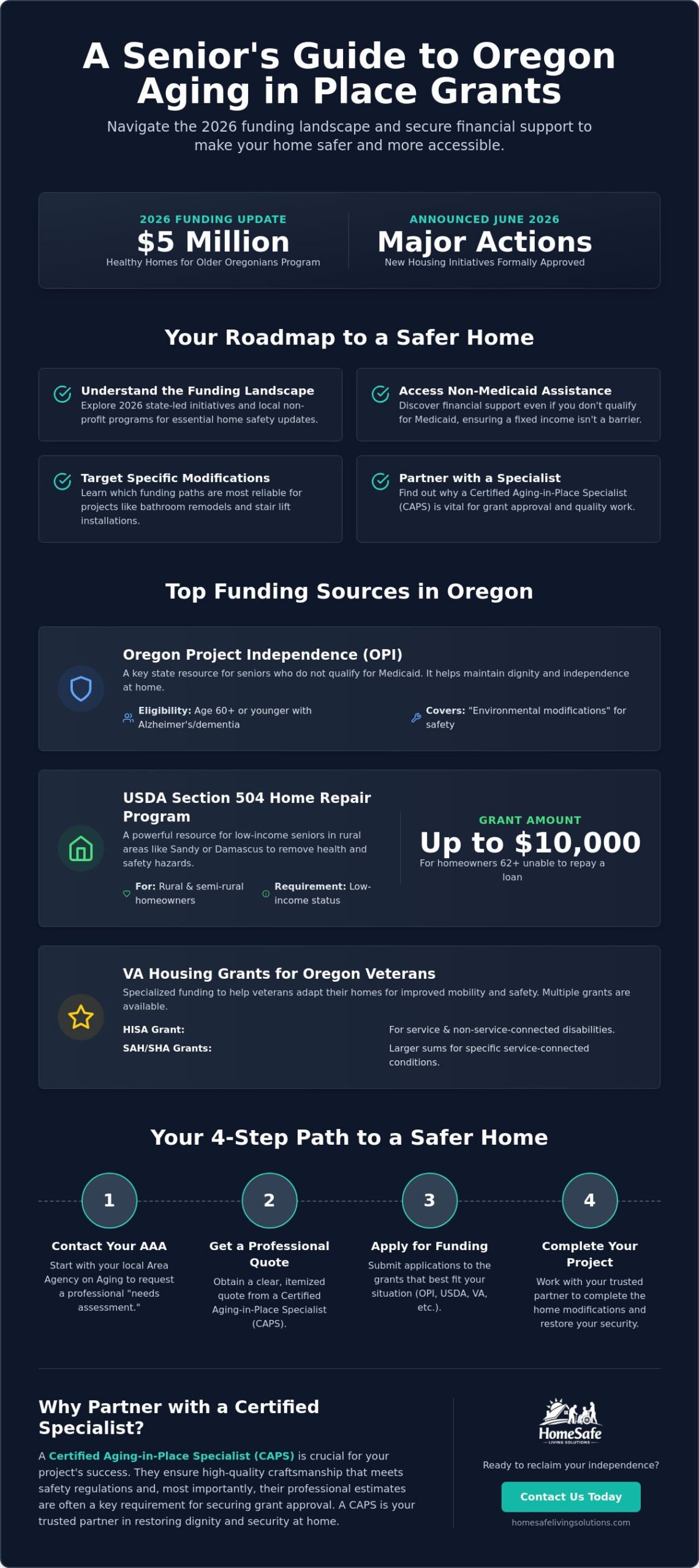
You deserve the peace of mind that comes with a safe, tailored environment. This guide simplifies your search for funding, showing you exactly where to find financial support for your home modifications. We’ll explore the latest 2026 funding updates, such as the $5 million Healthy Homes for Older Oregonians program and major housing actions formally announced in June 2026. By the end of this article, you’ll have a clear roadmap to the grants available today and a better understanding of how to find a trusted partner to help you restore your dignity and security at home.
Key Takeaways
- Understand the 2026 funding landscape, including state-led initiatives and local non-profit programs that provide oregon aging in place grants for essential home safety updates.
- Discover how to access financial assistance even if you don’t qualify for Medicaid, ensuring that a fixed income doesn’t stand in the way of your independence.
- Learn which funding paths are most reliable for specific modifications like handicap bathroom remodels and professional stair lift installations.
- Find out why partnering with a Certified Aging-in-Place Specialist (CAPS) is often a vital step for securing grant approval and ensuring high-quality craftsmanship.
- Follow a clear, step-by-step process to move from the initial search for funding to the successful completion of your home accessibility project.
Navigating Oregon Aging in Place Grants and Financial Assistance
Finding the right path to stay in your home shouldn’t feel like a puzzle. In 2026, the landscape for oregon aging in place grants has evolved to offer more support than ever for residents in Portland, Gresham, and Damascus. We believe that every handicap bathroom remodel or stair lift installation is more than just a construction project; it’s an essential investment in your family’s security. Aging in place allows you to remain where your memories are while ensuring your daily environment remains protective and accessible. Aging in Place Grants are specialized financial awards designed to remove architectural barriers for seniors.
Understanding the different funding tiers is the first step toward reclaiming your independence. Federal grants, often provided by the USDA or VA, typically focus on rural homeowners or veterans. State programs are managed through Oregon’s social services and offer broader accessibility. Local non-profits frequently step in to fill the gaps for specific community needs. Peace of mind begins here by identifying which of these tailored solutions fits your unique situation.
The Role of the Area Agency on Aging (AAA)
Oregon’s 16 Area Agencies on Aging (AAA) act as the primary gateway for home modification funding. For those in Portland or Gresham, Multnomah County Aging Services is your local expert. Residents in Clackamas, Damascus, or Sandy should contact Clackamas County Social Services. You can request a “needs assessment” through these offices. This evaluation is a professional review of your living situation that triggers eligibility for state-funded programs and local assistance.
Oregon Project Independence (OPI) in 2026
Oregon Project Independence (OPI) remains a vital resource in 2026 for those who don’t qualify for Medicaid. This program includes specific provisions for “environmental modifications,” which cover essential safety updates to your home. Eligibility usually requires you to be age 60 or older. OPI also extends its reach to younger individuals living with early-onset Alzheimer’s or dementia. These funds are designed to help you maintain your dignity without the stress of overwhelming costs.
Top Funding Sources for Home Accessibility Modifications in Oregon
Many residents in Gresham and Clackamas worry they fall into a “funding gap” where their income is slightly too high for Medicaid but not enough to easily afford a handicap bathroom remodel. This shouldn’t stop you from pursuing a safer home. It’s a common frustration, but Medicaid isn’t the only path to security. You can often combine different oregon aging in place grants with low-interest loans or private savings to cover the full cost of your project. Peace of mind begins here by looking beyond traditional welfare programs to find tailored financial support.
The official portal for Oregon Aging and People with Disabilities provides an excellent starting point for exploring these non-Medicaid paths. Most of these programs require a professional estimate before you can even submit an application. Having a clear, itemized quote from a trusted contractor ensures the grant committee understands exactly how the funds will restore your independence. It also proves that the work will meet all necessary safety and regulatory requirements for your specific property.
USDA Section 504 Home Repair Program
If you live in a rural or semi-rural part of the state, such as Sandy or Damascus, the USDA Section 504 program is a powerful resource. It specifically helps low-income seniors remove health and safety hazards from their homes. This is a reliable way to fund the installation of wheelchair-accessible showers or sturdy entry ramps. For homeowners age 62 or older who don’t have the means to repay a loan, grants of up to $10,000 are available to cover these vital repairs. It’s a lifeline for those who want to stay in their local communities safely.
Since these grants often cover critical exterior updates like roofing and window repairs to ensure a safe environment, you may want to visit Powersol Solutions to learn how professional exterior services can support your aging-in-place goals.
VA Housing Grants for Oregon Veterans
Veterans in the Portland metro area have unique options to fund their home modifications. The HISA grant is frequently used to pay for walk-in showers and stair lift installations that improve daily mobility. Unlike other VA programs, HISA is available to veterans with both service-connected and non-service-connected disabilities. For more extensive needs, the SAH (Specially Adapted Housing) and SHA (Special Home Adaptation) grants provide larger sums for veterans with specific service-connected conditions. These programs ensure those who served can live with the dignity they’ve earned.
Securing Your Funding: The Path to a Safer Oregon Home
Moving from researching oregon aging in place grants to actually starting construction requires a clear, professional strategy. Granting organizations don’t just look for a need; they look for a solution that is technically sound and professionally vetted. We understand that this process can feel overwhelming, but you don’t have to navigate the paperwork alone. Peace of mind begins here with a partner who understands how to leverage oregon aging in place grants to create a tailored environment that protects your dignity and independence.
Step 1: Get a Professional Accessibility Assessment
A simple DIY list of desired changes isn’t enough to satisfy most grant committees. To secure funding, you need a detailed scope of work that justifies every modification based on safety and accessibility standards. This is where working with a Certified Aging-in-Place Specialist (CAPS) becomes essential. Mate Skoro and his team bring this specific expertise to every evaluation, ensuring your funding request is backed by professional authority. By choosing a specialist for your Aging in Place Home Modification, you provide grantors with the confidence that the project will truly restore your safety. Many Oregon Home Modification Funding Sources require these professional assessments as a condition for approval.
Step 2: Compare Quotes and Compliance
Once you have an assessment, you need a contractor who understands the strict ADA requirements and local Oregon building codes. A mistake in compliance can lead to grant funds being withheld or projects being rejected during inspection. At HomeSafe Living Solutions, we prioritize both utility and aesthetics. We believe safety shouldn’t make your home feel like a clinical facility. Our modifications are designed to blend beautifully into your existing space, maintaining the character of your sanctuary while adding life-changing protection. Protect your home today by ensuring your contractor has a proven record of working with grant-funded projects.
Ready to take the first step toward a safer, more independent life? Schedule your Free Home Assessment today to start your journey toward a safer home. We’ll help you document the necessary changes and provide the professional expertise needed to move your project forward with confidence.
Protect Your Independence and Stay in the Home You Love
Staying in your family home shouldn’t be a source of stress or physical risk. The landscape of oregon aging in place grants is filled with opportunities for those who know where to look. Whether you’re a veteran in Portland or a rural homeowner near Eugene, there are tailored financial paths to fund your handicap bathroom remodel or stair lift installation. By securing a professional assessment from a specialist who understands both ADA compliance and local grant requirements, you transform a complex process into a manageable plan for long-term safety.
Mate Skoro and his team are dedicated to helping Oregon families navigate these changes with dignity. As a Certified Aging-in-Place Specialist (CAPS), Mate ensures that every modification is designed to blend beautifully into your home while providing the security you deserve. We specialize in high-quality craftsmanship that prioritizes your comfort without sacrificing the character of your personal sanctuary. Peace of mind begins here, and we’re ready to help you take that first step toward a safer future.
Don’t let another day go by feeling unsafe in your own space. Start your journey to a safer home with a Free Assessment today. You have the strength to maintain your independence, and we’re here to provide the expertise and support to make it happen.
Frequently Asked Questions
Does Medicare cover home modifications in Oregon?
Traditional Medicare doesn’t cover home modifications like ramps or grab bars because they aren’t considered “durable medical equipment.” However, some Medicare Advantage plans in Oregon offer supplemental benefits for safety devices. You should check your specific plan’s summary of benefits to see if they provide a small allowance for these essential security updates. Peace of mind begins here by knowing exactly what your insurance will and won’t support.
How much can I get from the Oregon Project Independence for a bathroom remodel?
Funding through Oregon Project Independence (OPI) isn’t a fixed dollar amount for everyone. Instead, it’s determined by a personal needs assessment conducted by your local Area Agency on Aging. The program prioritizes “environmental modifications” that help you stay out of assisted living. Your caseworker will determine the specific budget based on your safety risks and the necessity of the remodel to keep you independent.
Are there grants for walk-in showers specifically for seniors in Eugene?
Seniors in Eugene can access specialized funding through the Lane Council of Governments (LCOG). They offer assistance for modifications like walk-in showers to prevent falls. Additionally, the City of Eugene has historically provided a Senior Home Repair Program that provides low-interest loans or small grants for safety-related improvements. These programs ensure your bathroom remains a personal sanctuary rather than a source of anxiety.
Who qualifies for the USDA Section 504 Home Repair Grant in Oregon?
To qualify for the USDA Section 504 grant, you must be age 62 or older, live in a designated rural area, and have a household income below 50% of the area median income. These oregon aging in place grants are specifically for those who don’t have the means to repay a loan. The funds must be used to remove health and safety hazards, making your home a protective and stable environment once again. For an example of how specialized repairs like concrete leveling can eliminate trip hazards from sinking walkways, you can learn more about Airlift Concrete Experts.
How long does the application process take for Oregon aging in place grants?
The timeline for oregon aging in place grants varies significantly depending on the specific program. Federal programs like the USDA 504 can take several months to process due to government bureaucracy. Local non-profit or state programs might move faster, sometimes within 30 to 60 days. It’s best to start your application early so you have the support you need before a fall or injury occurs.
Can I use a grant to pay for a stair lift installation?
Yes, several grant programs specifically allow for stair lift installations if they’re required for safety and accessibility. The VA HISA grant is a common source for veterans needing mobility assistance in their homes. State-level programs also recognize that being able to access the upper levels of your home is vital for maintaining your independence and dignity. We ensure these modifications blend beautifully into your home’s character.