With less than 1% of Oregon rental units fully accessible for mobility devices, your family home isn’t just a building; it’s the foundation of your independence. It’s overwhelming to realize that a safe bathroom or a necessary stair lift often costs more than a monthly budget allows. You shouldn’t have to choose between your safety and your savings, especially when you need financial assistance for home modifications for disabled. We believe every Oregonian deserves the peace of mind that comes from a secure, tailored environment.
This guide provides a clear roadmap to making your home safer, layering federal grants with local non-profit support. You’ll discover how to access the $126,526 VA SAH grant, USDA Section 504 programs, and the latest 2026 Oregon Healthy Homes funding. We’ll show you exactly how to transform a stressful remodeling ordeal into a manageable, professional process that preserves your dignity.
Key Takeaways
- Discover how to leverage federal programs like VA housing grants and USDA Section 504 to obtain financial assistance for home modifications for disabled, making essential safety upgrades more affordable.
- Identify local Oregon resources, including the Northwest Access Fund’s low-interest loans and state-level assistance programs designed to support independent living.
- Understand the value of working with a Certified Aging-in-Place Specialist to document medical necessity and ensure your project meets strict regulatory standards.
- Learn the strategic steps to prepare a professional bid that satisfies grant providers while maintaining the beauty and character of your family home.
Federal Grants and Government Programs for Home Accessibility
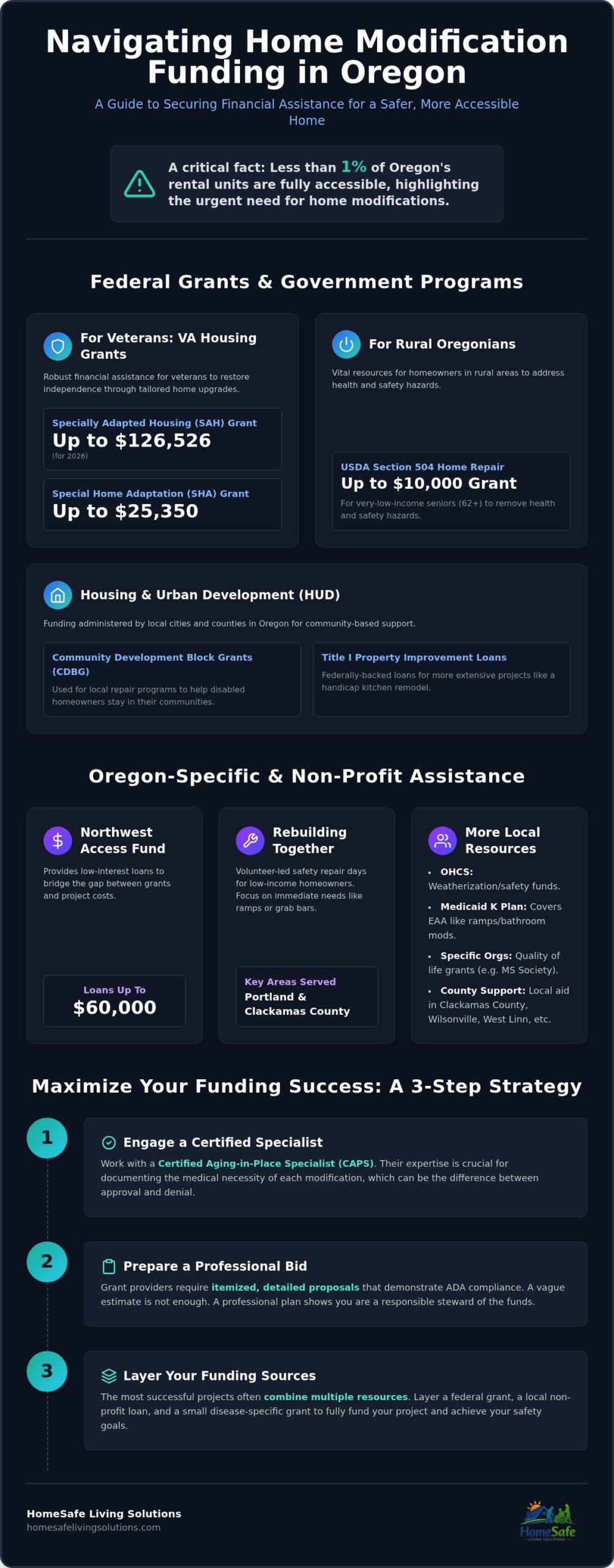
Finding the right funding path starts with federal programs that recognize your right to live safely at home. For veterans, the Department of Veterans Affairs offers some of the most robust financial assistance for home modifications for disabled. The Specially Adapted Housing (SAH) grant provides up to $126,526 for 2026, while the Special Home Adaptation (SHA) grant offers up to $25,350 for essential changes. These funds allow for tailored upgrades that restore your independence without compromising the character of your home.
If you live in a rural part of Oregon, the USDA Section 504 Home Repair program is a vital resource. Very-low-income seniors aged 62 or older can access grants of up to $10,000 specifically to remove health and safety hazards. Additionally, Oregon’s Medicaid K Plan, also known as the Community First Choice Option, often covers Environmental Accessibility Adaptations (EAA). This can include installing wheelchair ramps or modifying a bathroom to ensure your personal sanctuary remains safe and functional.
Department of Housing and Urban Development (HUD) Options
Local cities and counties in Oregon often administer Community Development Block Grants (CDBG) from HUD. These funds are frequently used for local repair programs that help disabled homeowners stay in their communities. If you need a more extensive project, such as a handicap kitchen remodel, a Title I Property Improvement Loan can provide the necessary capital. These loans are backed by the federal government, making it easier for homeowners to secure the funds needed for high-quality craftsmanship that blends beautifully into their existing space. Peace of mind begins here, knowing that professional solutions are within your reach.
Oregon-Specific Resources and Non-Profit Assistance
Oregon homeowners have several local avenues for financial assistance for home modifications for disabled beyond national programs. Oregon Housing and Community Services (OHCS) works through local Community Action Agencies to distribute weatherization and safety funds. If you need a more flexible option, the Northwest Access Fund provides low-interest loans up to $60,000. These are designed specifically for assistive technology and home modifications, helping you bridge the gap between grants and project costs while maintaining your financial stability.
Local chapters of Rebuilding Together in Portland and surrounding communities, particularly within Clackamas County, often host volunteer-led safety repair days. These programs focus on low-income homeowners, ensuring the most critical hazards are removed through community-driven service. It’s a heartwarming effort that restores dignity to your daily life while providing essential protection against falls. These projects often focus on immediate needs like ramps or grab bars that provide instant security and peace of mind.
Local Foundations and Disability-Specific Grants
Many disease-specific organizations offer small quality of life grants. The Multiple Sclerosis Society and the ALS Association often provide limited funding for home accessibility. These grants offer another layer of financial assistance for home modifications for disabled. While they might not cover a full ADA remodel, they help with smaller, vital additions that improve your comfort. These organizations understand the personal challenges you face and provide a supportive hand during difficult transitions.
County-Level Support
Don’t overlook local government offices. Clackamas County Social Services and other local government offices in the HomeSafe Living Solutions service area, including cities like Wilsonville, West Linn, Oregon City, and Tualatin, are excellent starting points for localized aid. They can connect you with regional programs that aren’t always advertised nationally. Getting a free home assessment is a great way to identify which modifications these local programs should prioritize for your safety. This personalized approach ensures every dollar is spent on craftsmanship that truly protects your family and your independence.
Strategic Planning: How to Maximize Your Funding Success
Securing financial assistance for home modifications for disabled requires a strategic approach. It isn’t just about finding a program; it’s about proving the medical necessity of every change. Working with a Certified Aging-in-Place Specialist (CAPS) is your greatest advantage. These experts document how specific modifications, like a wheelchair-accessible shower, directly support your safety. This professional documentation often makes the difference between a denied application and a fully funded project.
Your bid structure matters. Grant providers and insurance companies demand itemized, detailed proposals that prove ADA compliance. A vague estimate won’t work. By presenting a professional, comprehensive plan, you show that you’re a responsible steward of the funds. Often, the best path forward involves layering your resources. You might combine a small non-profit grant for immediate safety repairs with a low-interest loan for a complete ADA remodel. This layered strategy ensures you don’t have to compromise on the quality or scope of your home improvements while seeking financial assistance for home modifications for disabled.
The Importance of Professional Installation
Attempting a DIY project can unfortunately disqualify you from many grant programs. Most funders require work to be performed by licensed, bonded contractors who understand strict ADA regulations. Choosing a professional ensures the work is done right the first time, saving you from costly future repairs or safety hazards. Mate Skoro and his team prioritize modifications that blend beautifully into your home while meeting all safety standards. Peace of mind begins here, knowing your sanctuary is protected by expert craftsmanship and a team that values your independence.
Restore Your Independence and Security
Your home should always be a place of comfort and safety, not a source of worry. By strategically layering federal grants with local Oregon resources, you can secure the financial assistance for home modifications for disabled needed to protect your future. Remember that professional documentation and expert installation are the keys to maximizing your funding success and ensuring your home remains a sanctuary.
As a locally owned and operated business, HomeSafe Living Solutions brings personal accountability to every project. Mate Skoro is a Certified Aging-in-Place Specialist (CAPS) who provides expert ADA-compliant craftsmanship designed to blend beautifully into your existing space. Schedule your Free Home Assessment with Mate and his team today to take the first step toward a safer, more independent life. Your peace of mind is our highest priority, and we’re here to help you every step of the way.
Frequently Asked Questions
Does Medicare pay for home modifications like walk-in showers or ramps?
Traditional Medicare doesn’t cover the cost of walk-in showers or ramps because they’re viewed as home improvements rather than durable medical equipment. You should check with your specific Medicare Advantage provider, as some plans offer supplemental benefits for safety upgrades. For many, seeking financial assistance for home modifications for disabled through state waivers remains a more reliable path for these installs.
How do I apply for a USDA home repair grant in Oregon?
You apply for the USDA Section 504 program through your local Oregon Rural Development office. This program provides grants up to $10,000 for homeowners aged 62 or older to remove health and safety hazards. It’s an excellent way to fund essential repairs that help you stay in your rural home safely while maintaining your independence and comfort.
Are home modifications for the disabled tax-deductible in 2026?
Home modifications are often tax-deductible as medical expenses if they’re medically necessary for a person with a disability. You can typically deduct the cost of improvements like widening doorways or installing grab bars, though you must subtract any increase in your home’s market value. Consult a tax professional to ensure you’re maximizing these benefits for your specific situation this year.
What is the maximum amount I can receive from the Northwest Access Fund?
The Northwest Access Fund offers low-interest loans of up to $60,000 for Oregon residents. These funds can be used for assistive technology or high-quality financial assistance for home modifications for disabled. With terms up to 10 years, these loans provide a manageable way to fund a complete ADA remodel while preserving your long-term financial peace of mind.